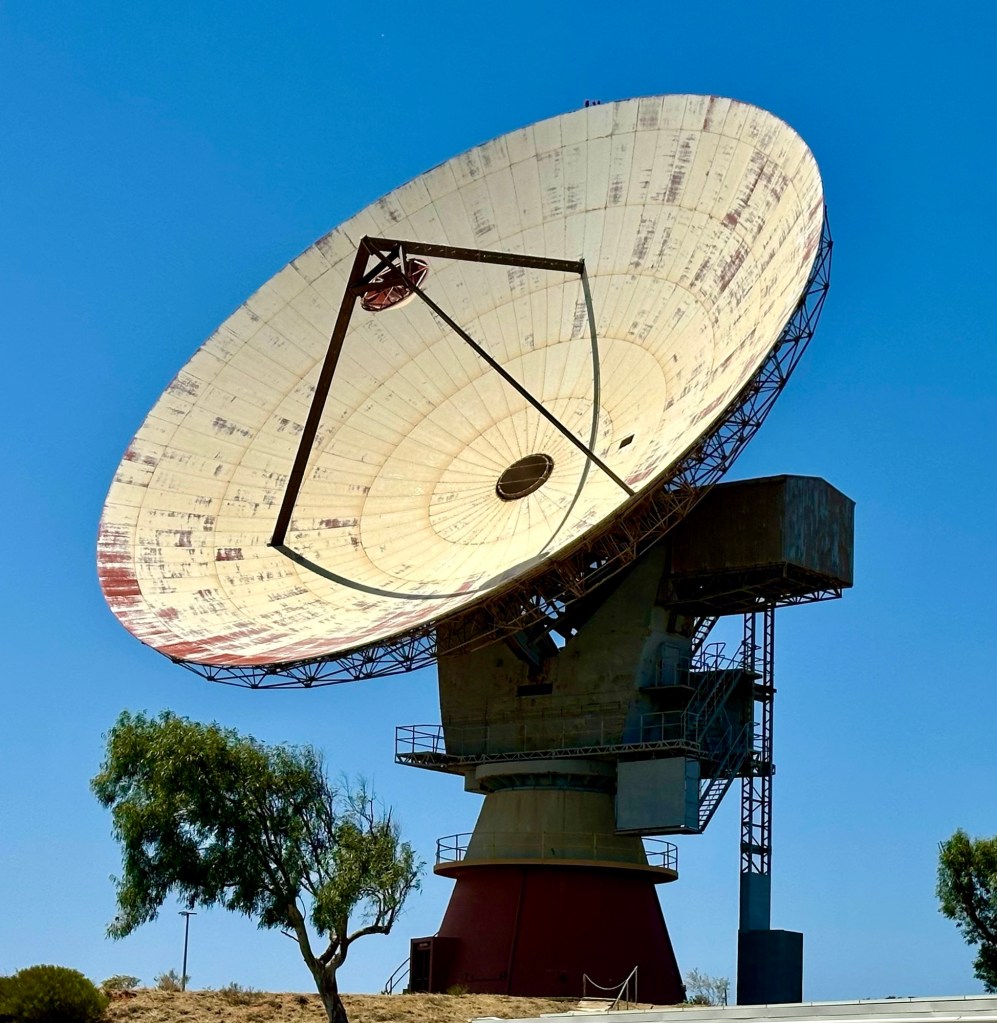
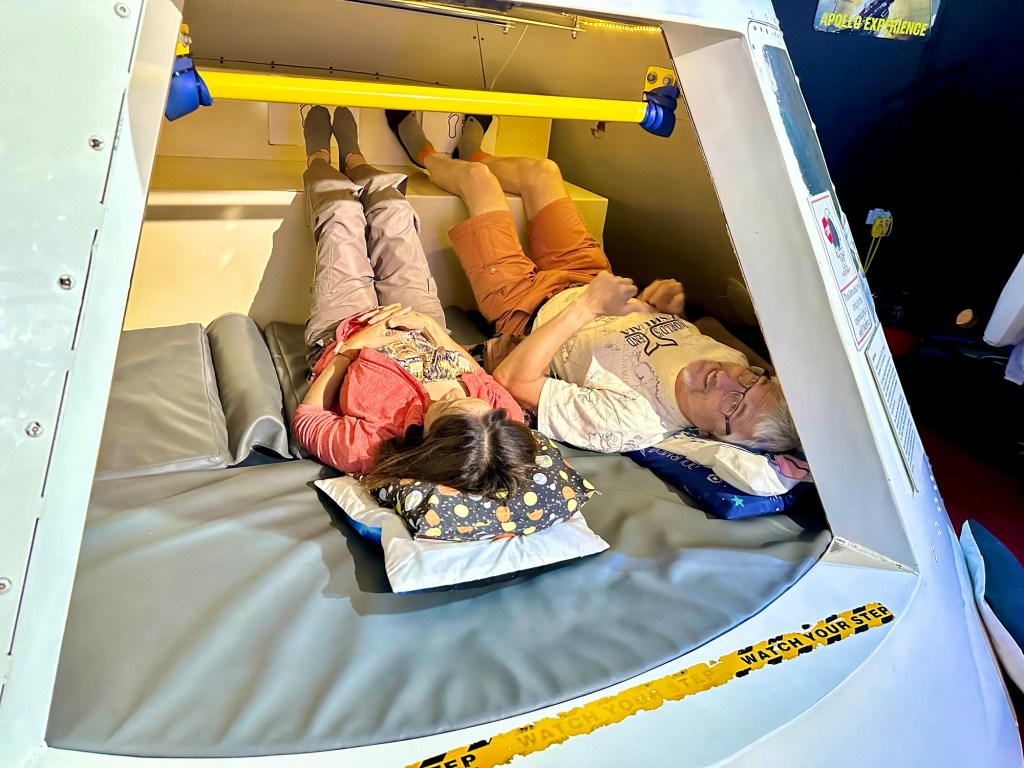
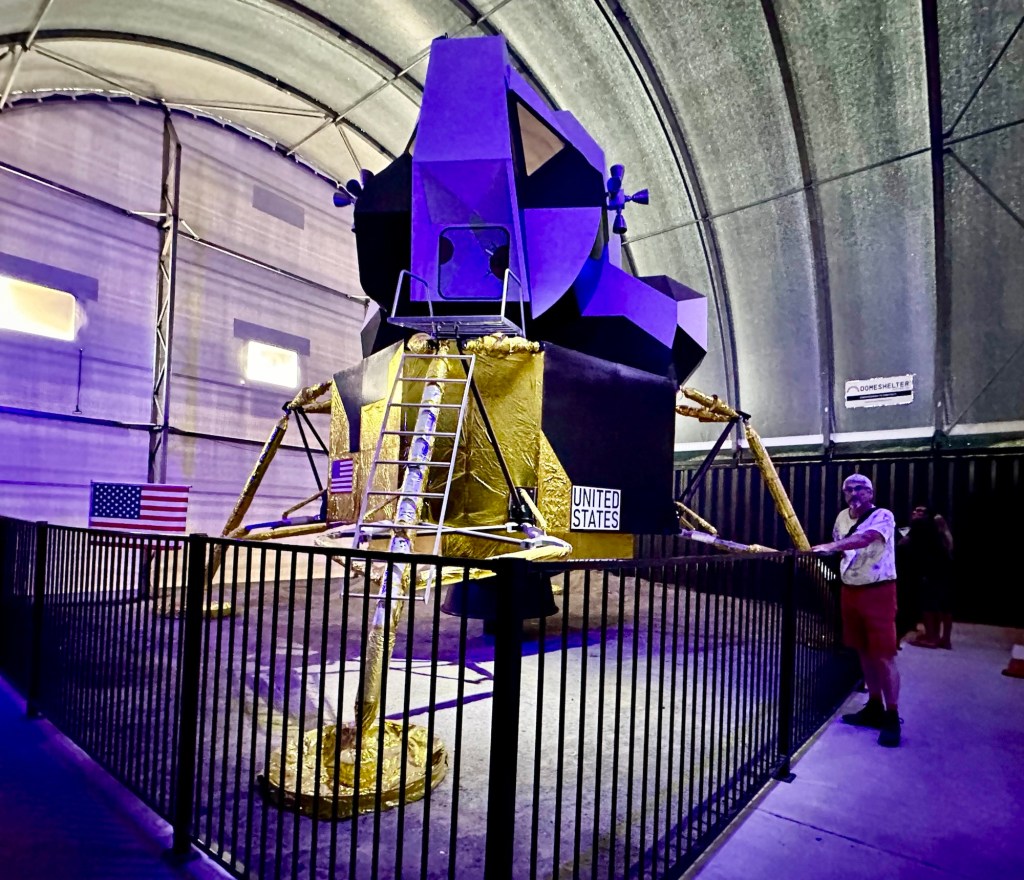
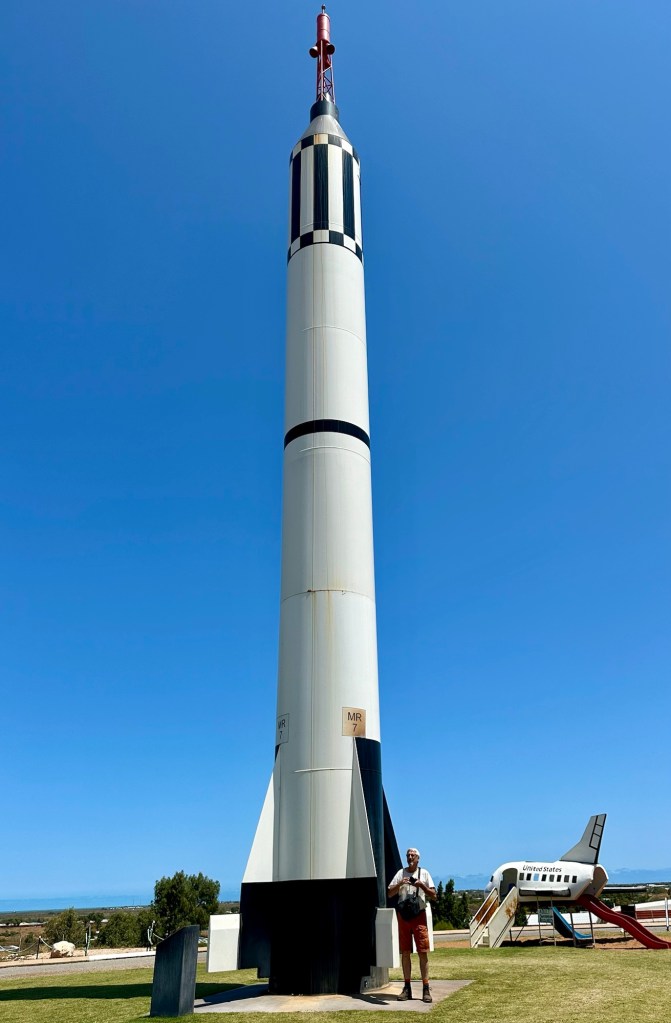
In Carnarvon the Nasa built a tracking station to relay the signals from the Mercury, Gemini, and Apollo missions in the sixties. The space museum also has full size mockups of the different capsules as well from the moon lander.
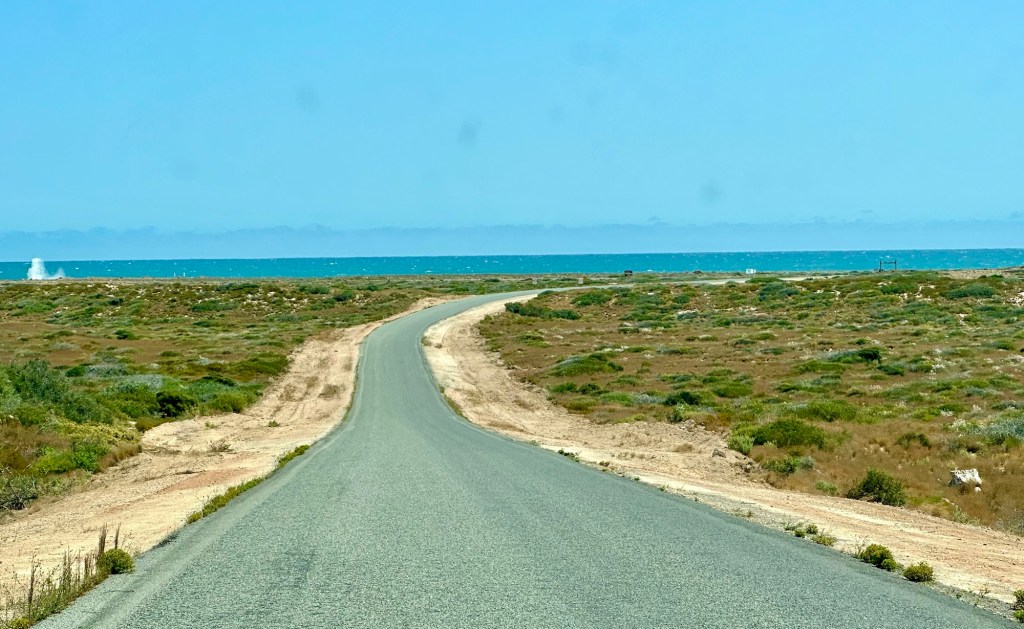
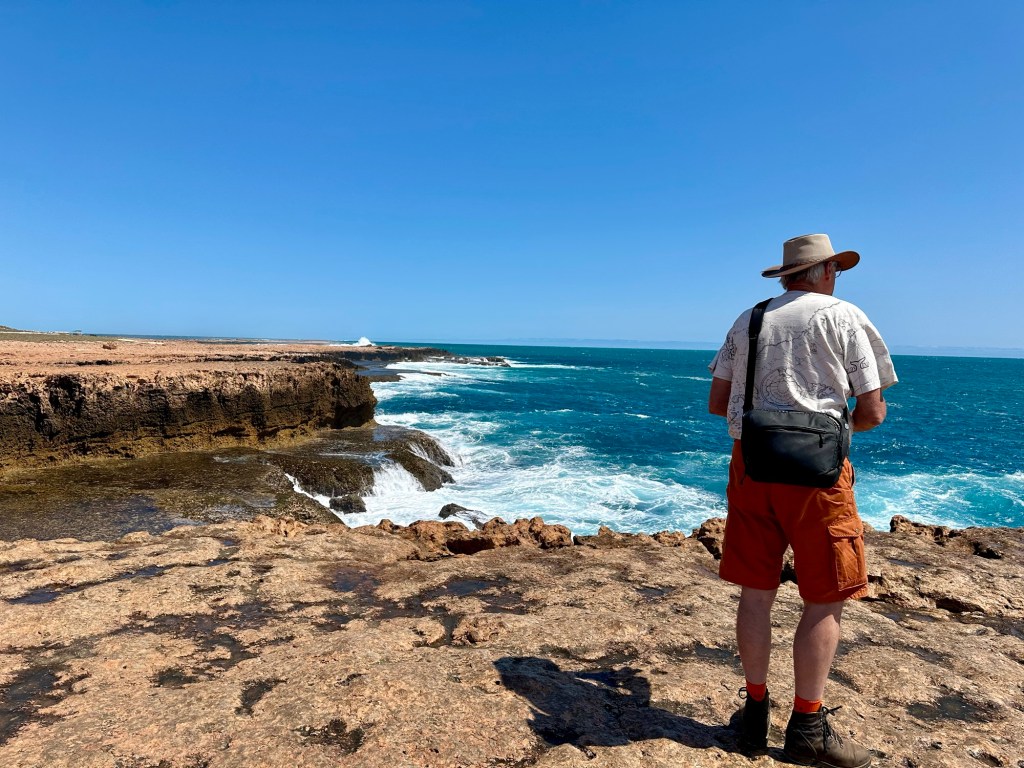
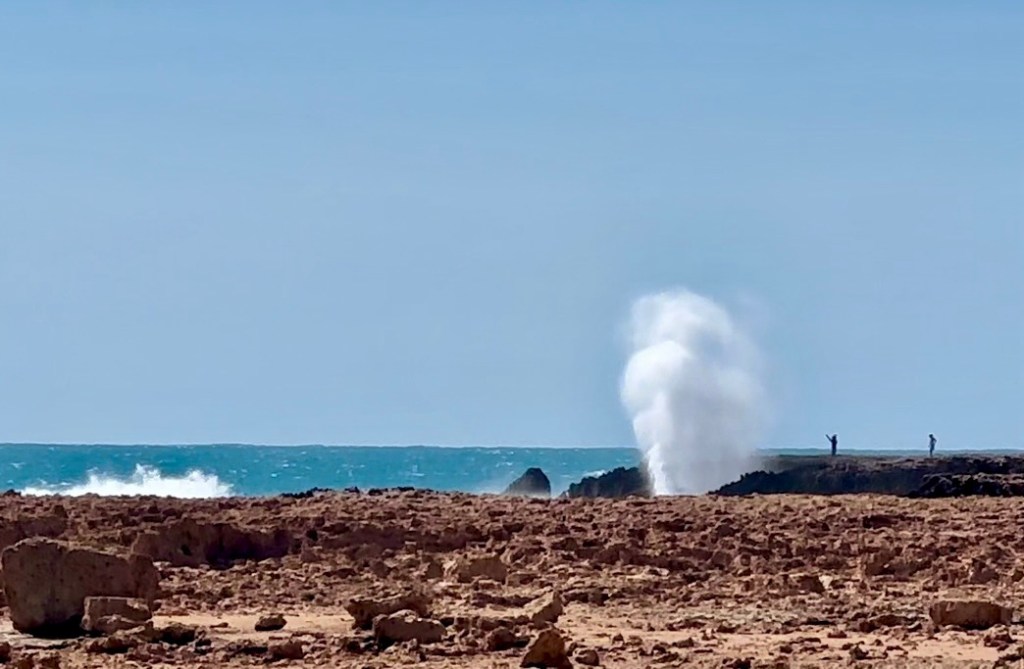
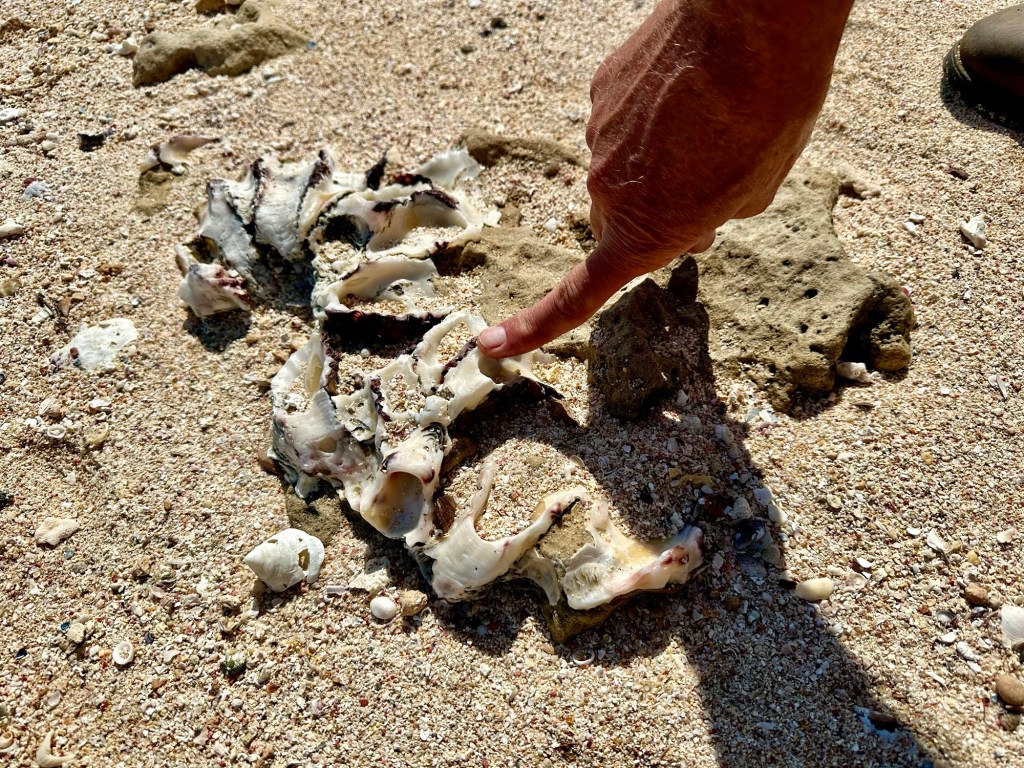
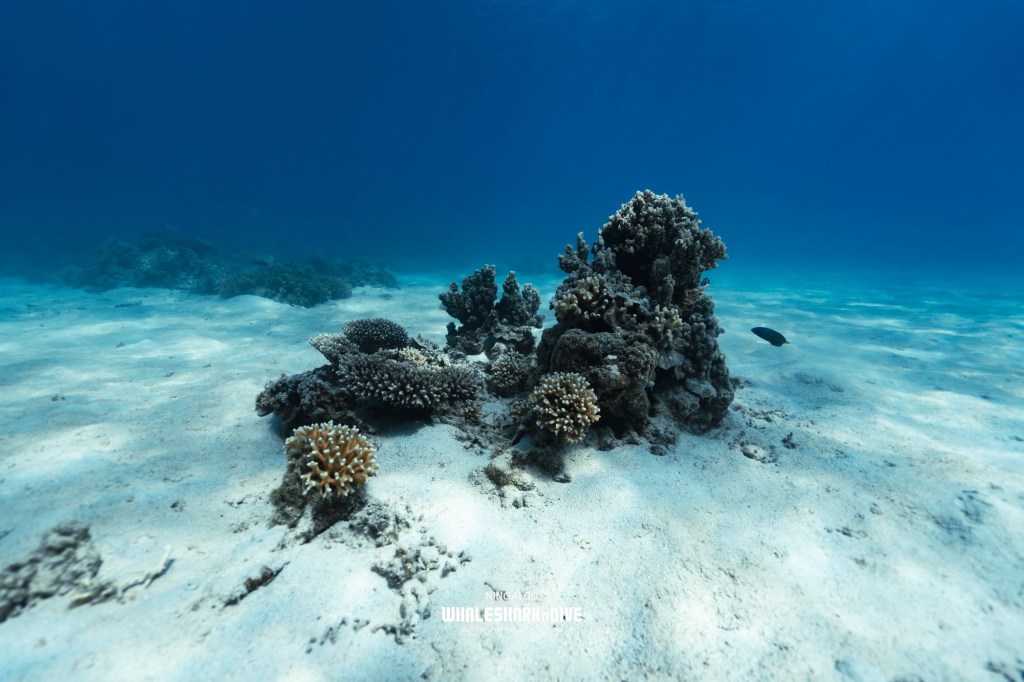
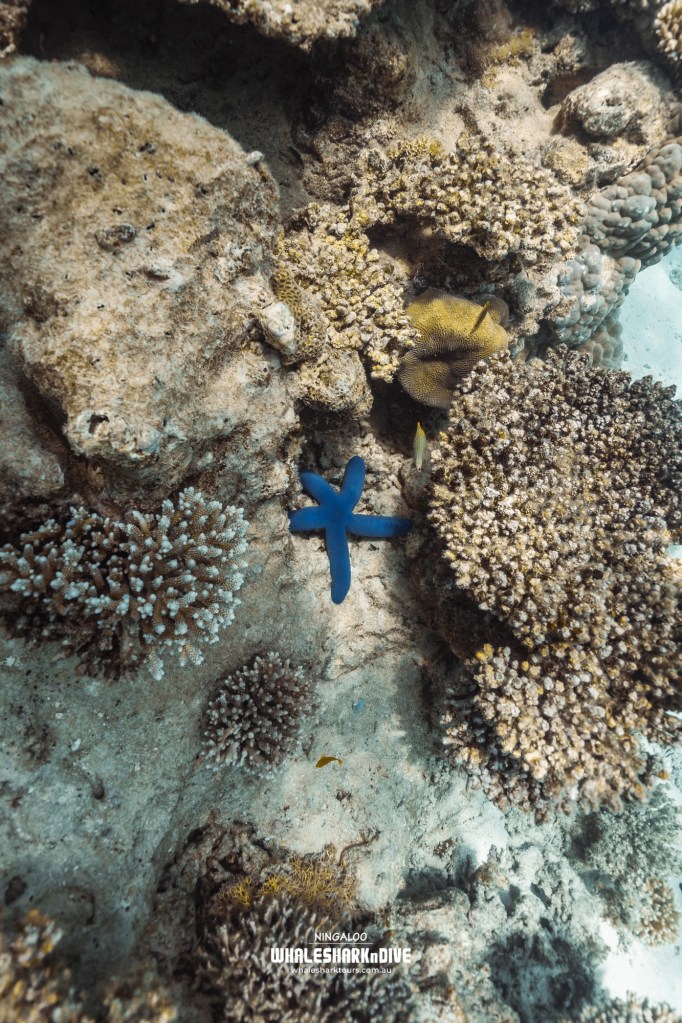
Further up the coast at Quobba there are blowholes. At low tide, the strong ocean waves push the water from the underwater cavern’s up into the sky. We arrived at high tide, so the spray was not spectacular but later in the day the spray was much higher as more pipes were functioning. The sea was too rough to go snorkeling. More chance at the Ningaloo Reef Marine Park, 450 km further up the west coast of Australia.
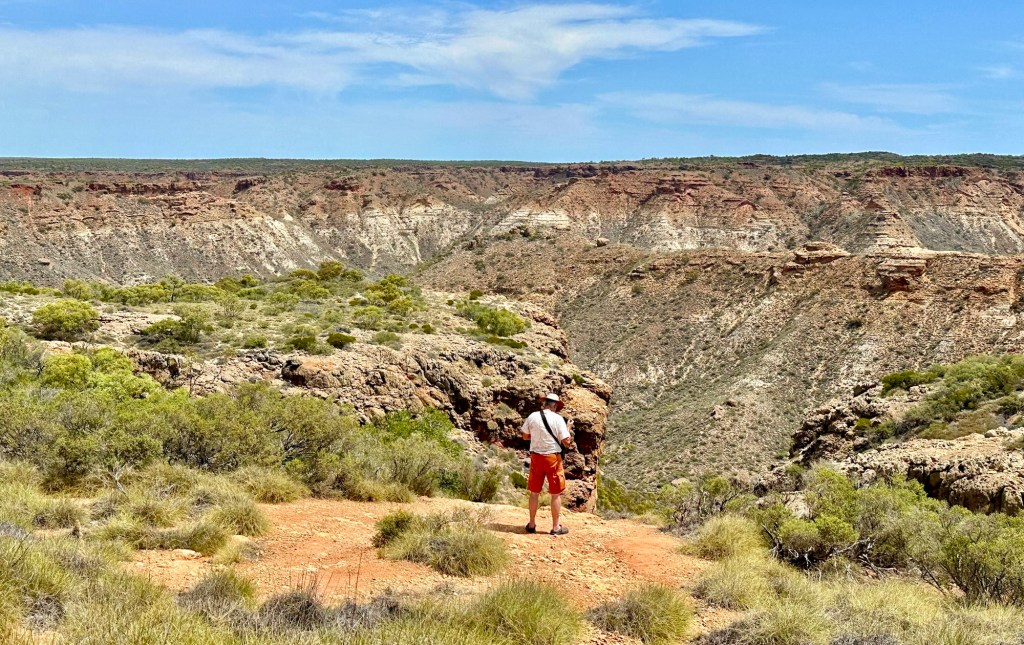
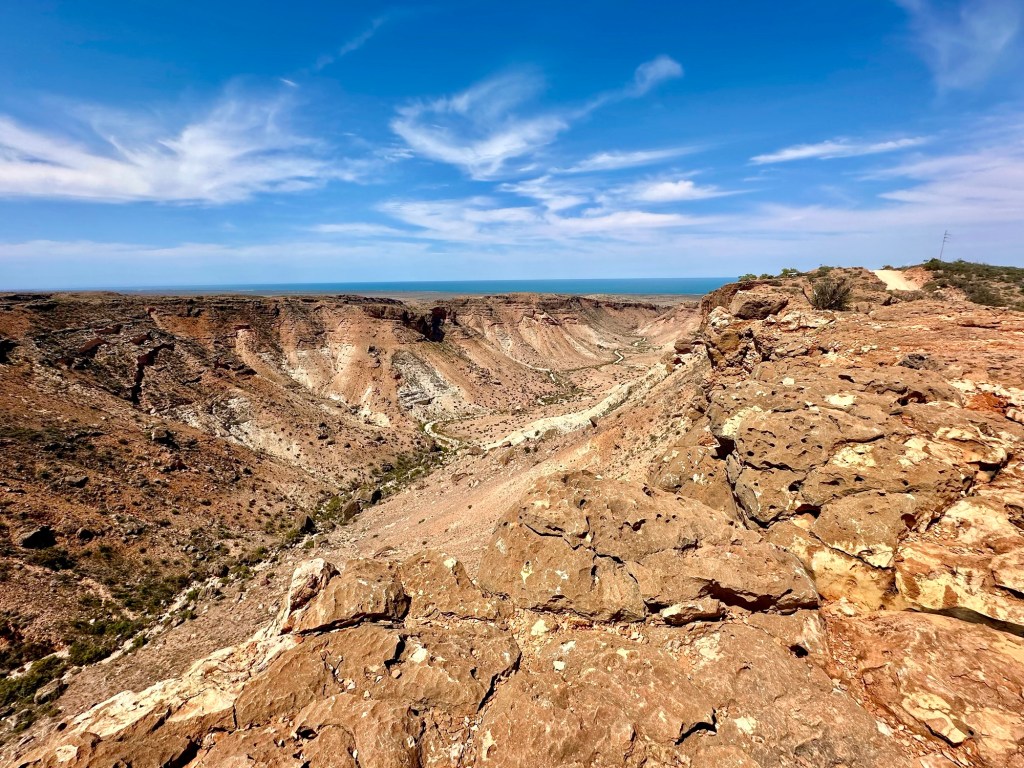
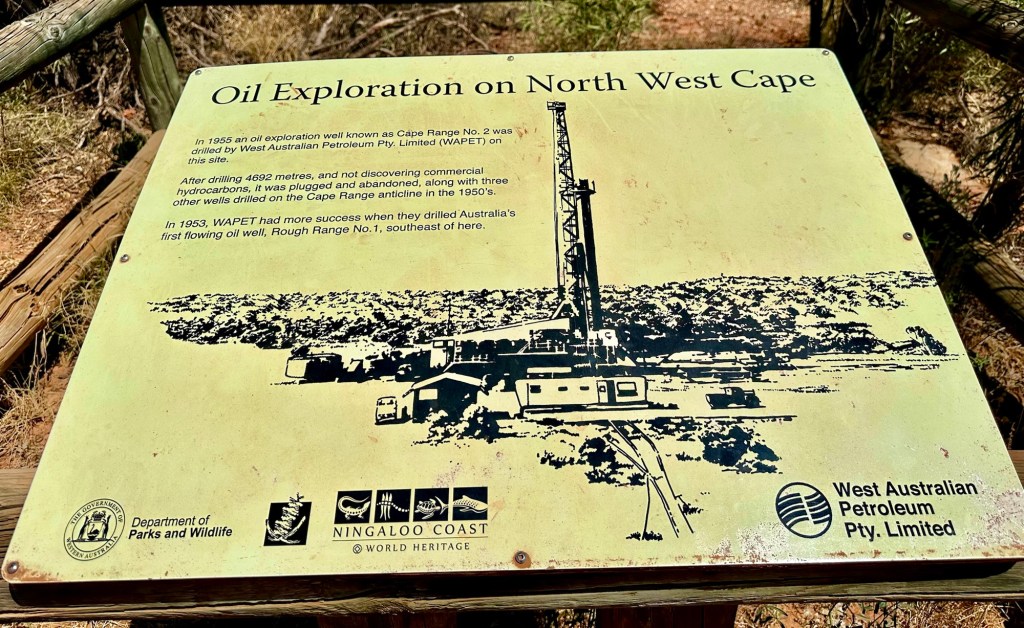
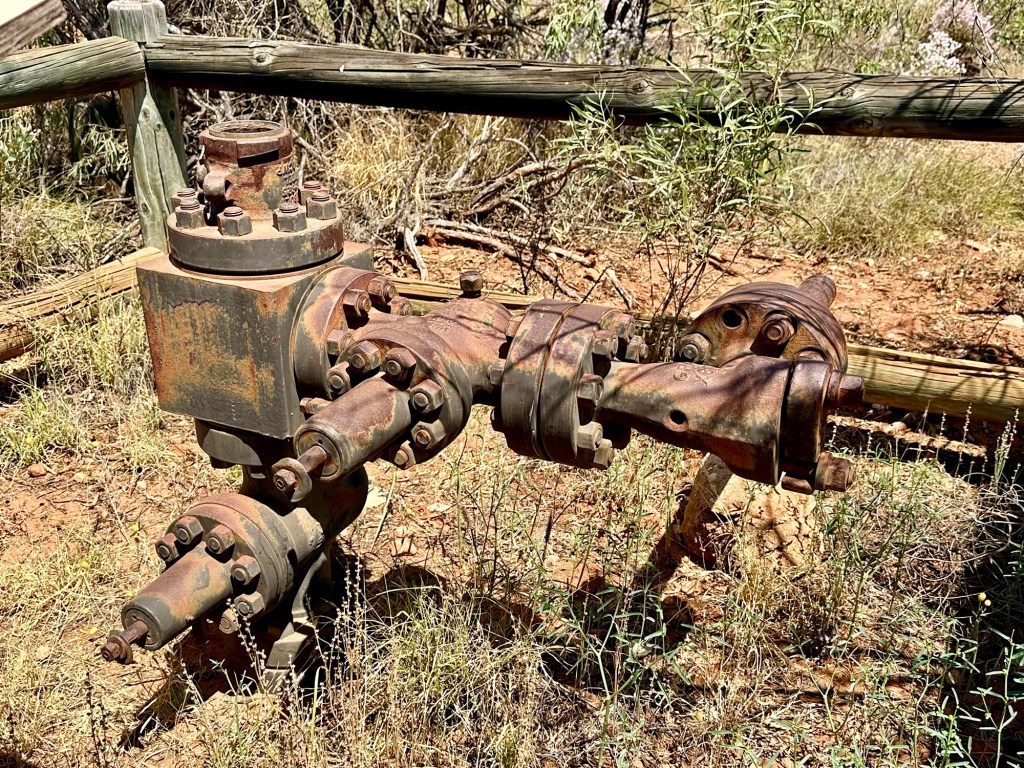
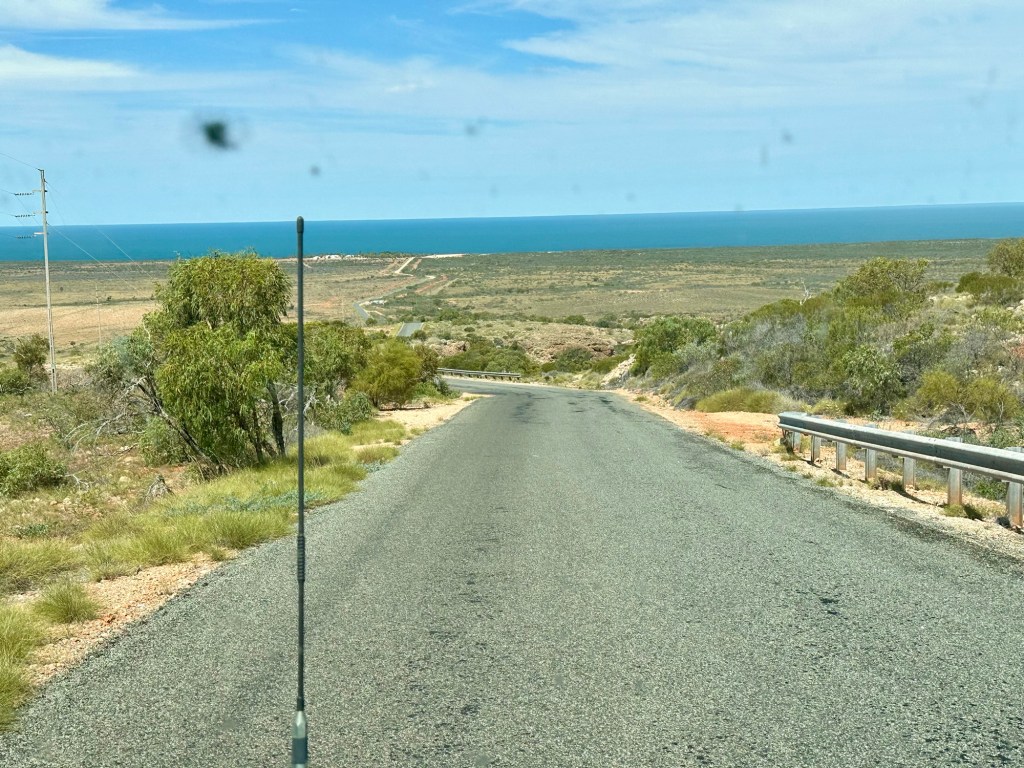
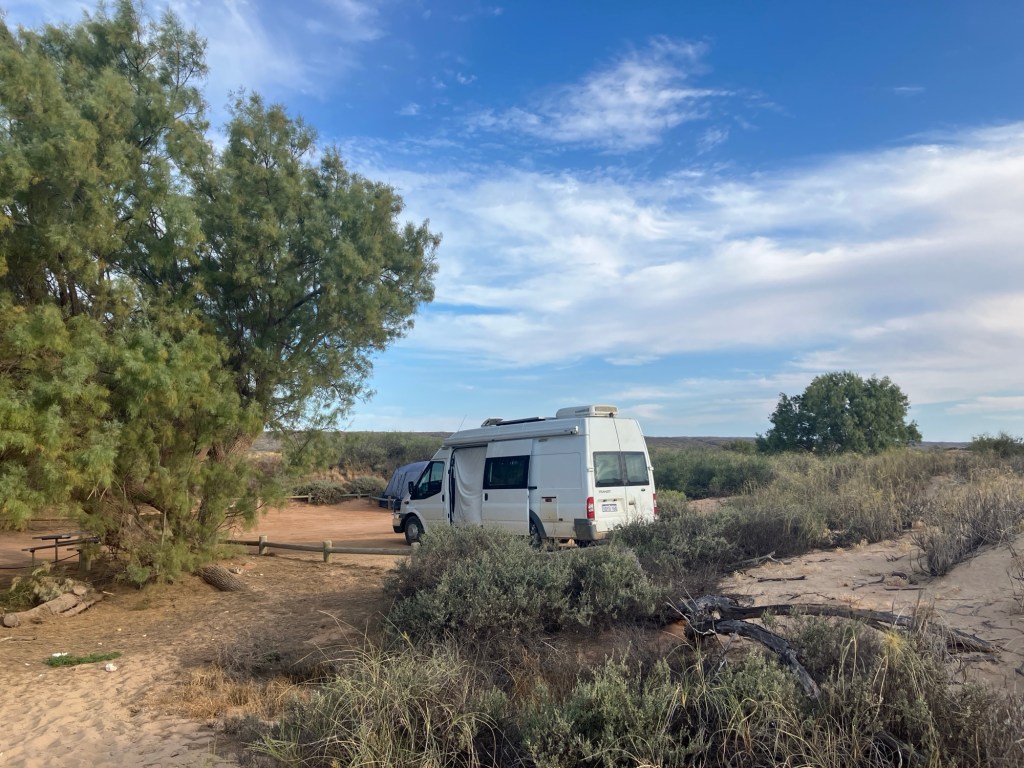
We managed to book a NP campsite in the dunes close to the sea. It is still school holidays, so we were lucky to get this spot. On the way in we made a short detour up a road over ridges to an old, abandoned drill site from the fifties. Although the environment was different it felt a lot like Labi road in Brunei. Also, there an exploration well was drilled far inland on top of a hill. The idea was that gas/oil accumulates in such layers (anticlines) deep in the ground. After 4500 m drilling, they did not find anything other than some hydrocarbon shows. Later producible quantities of gas were found offshore on Barrow Island.
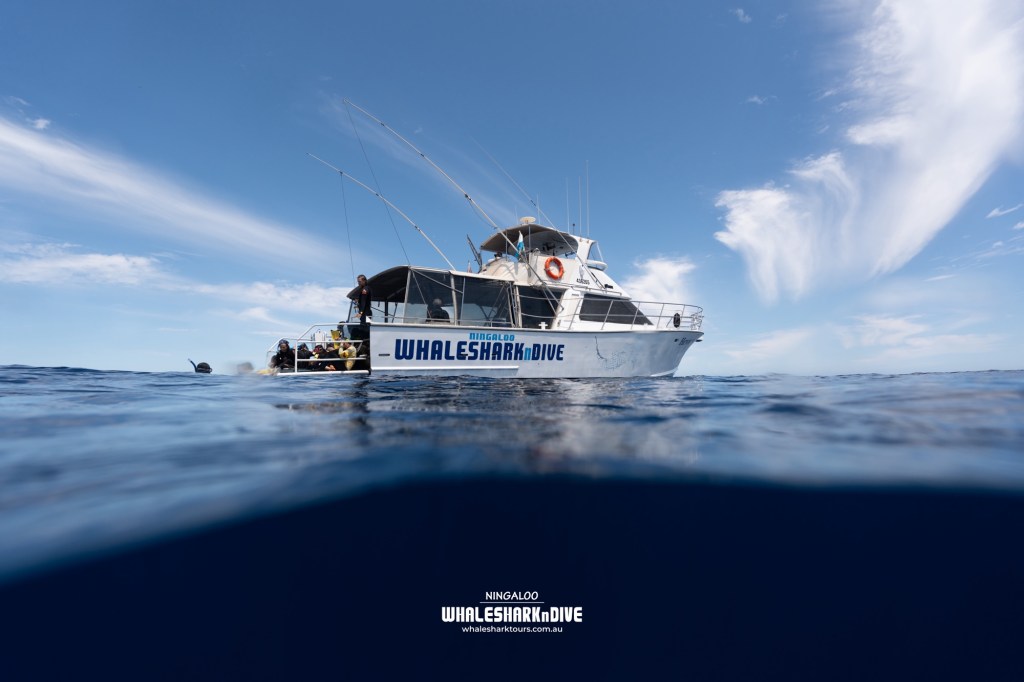
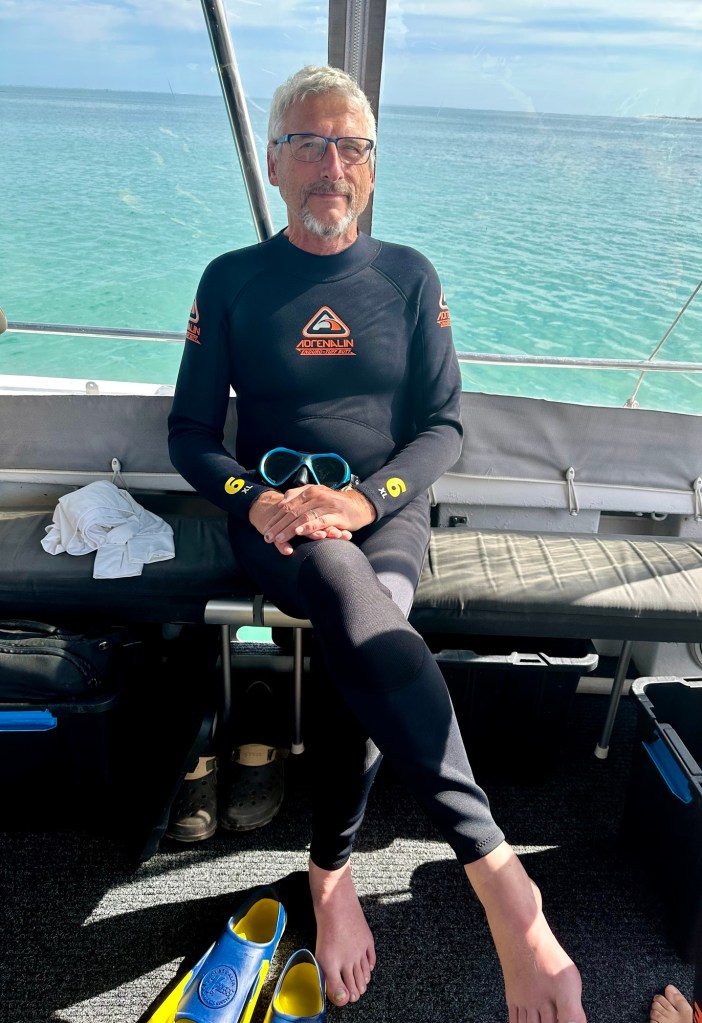
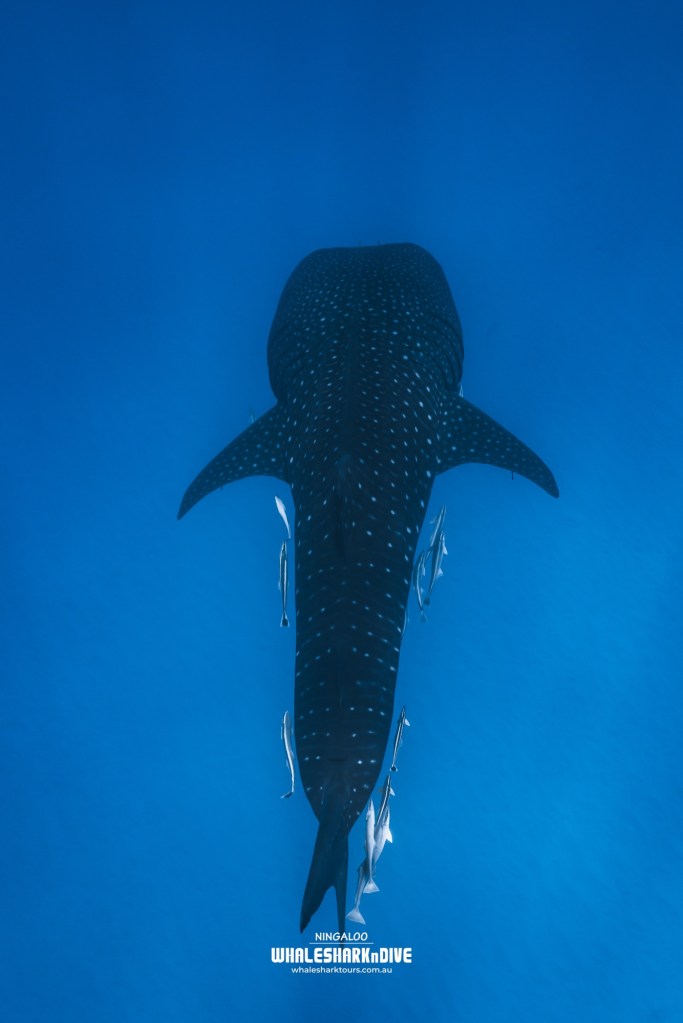
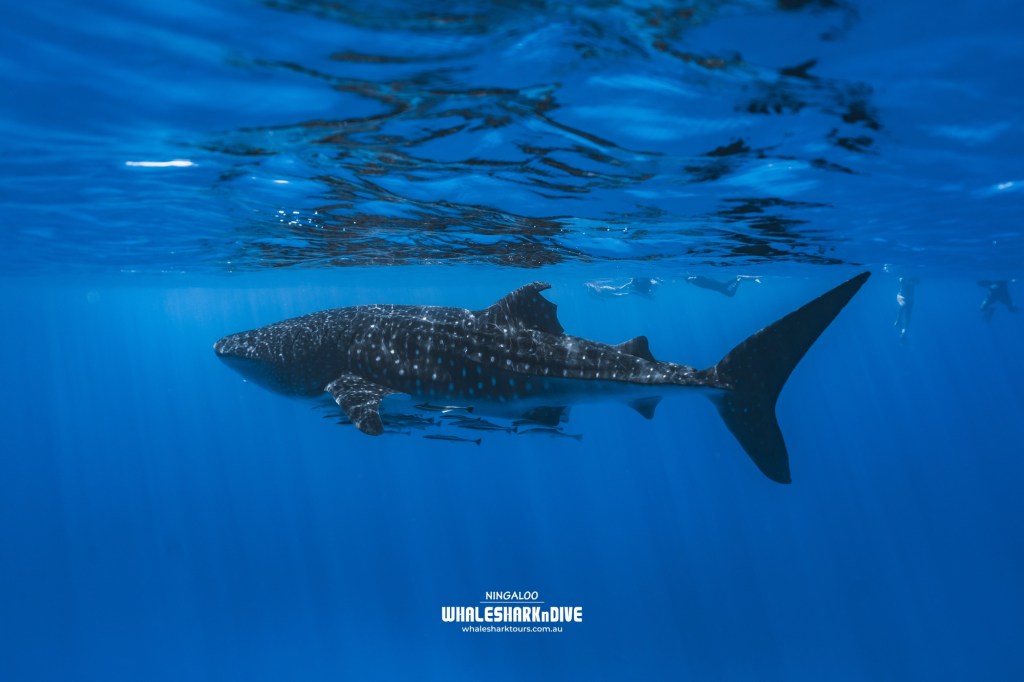
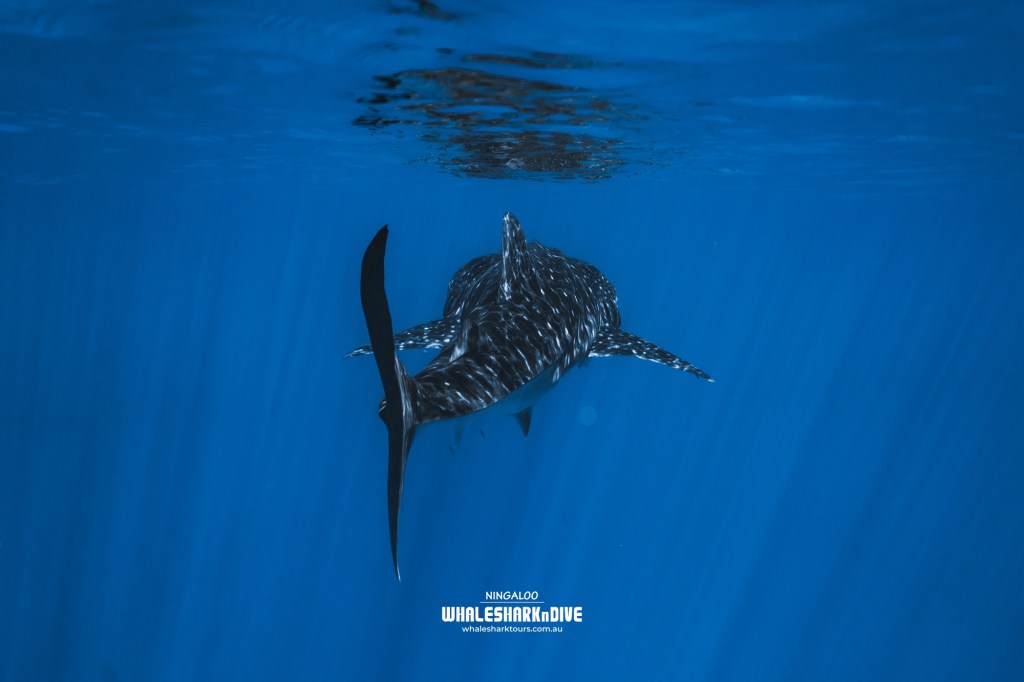
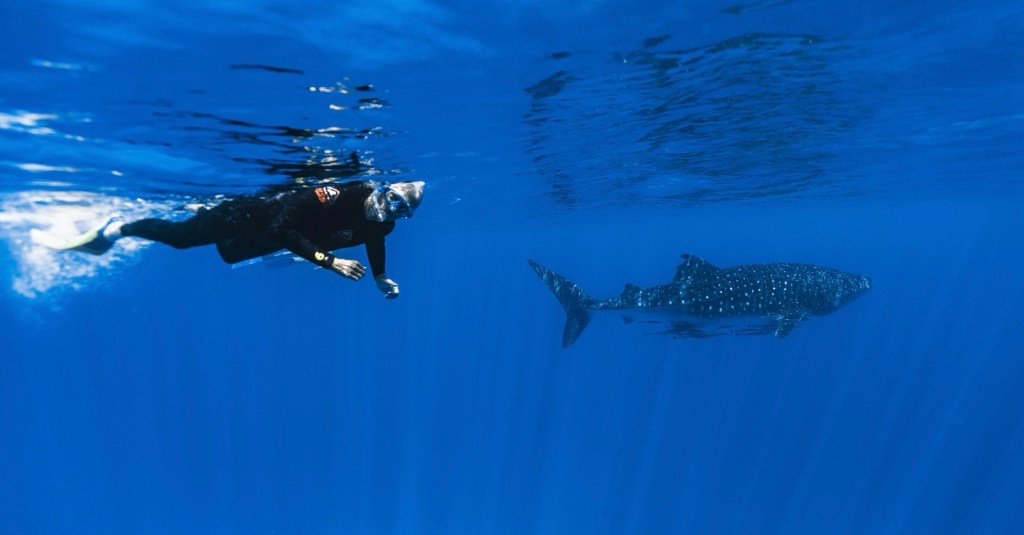
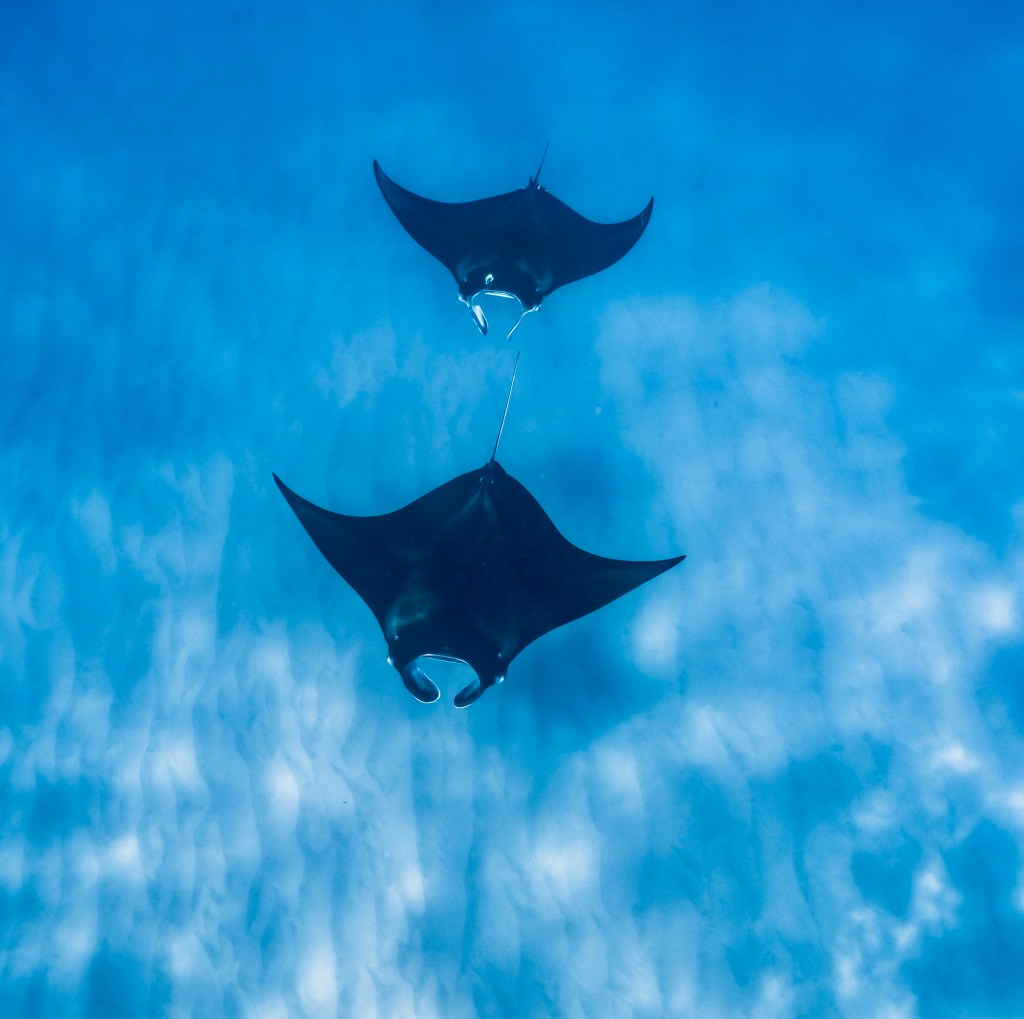
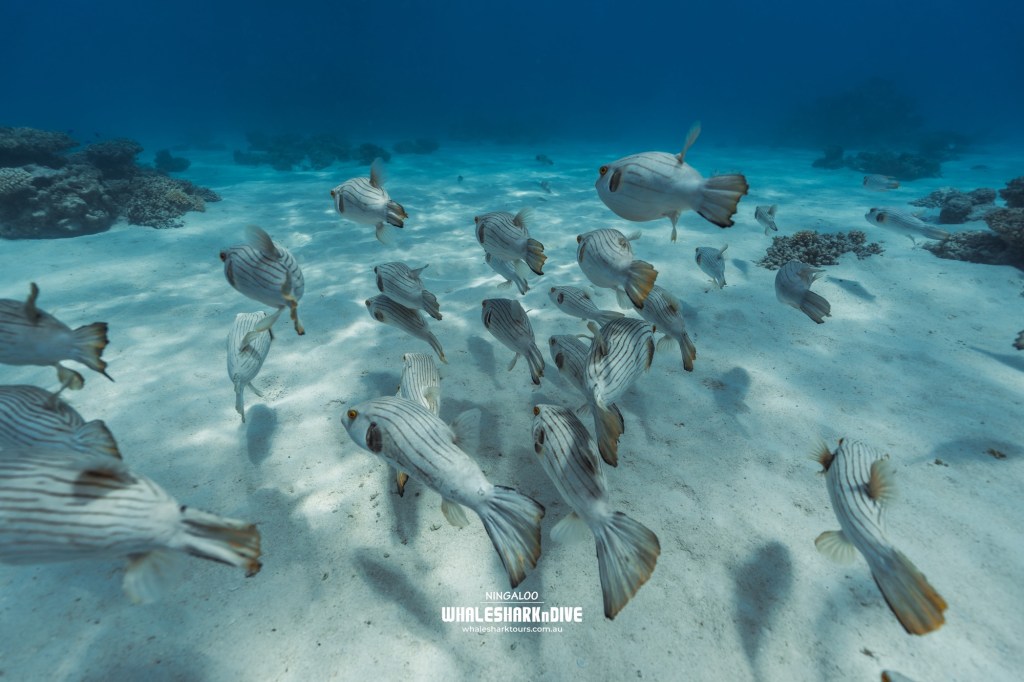
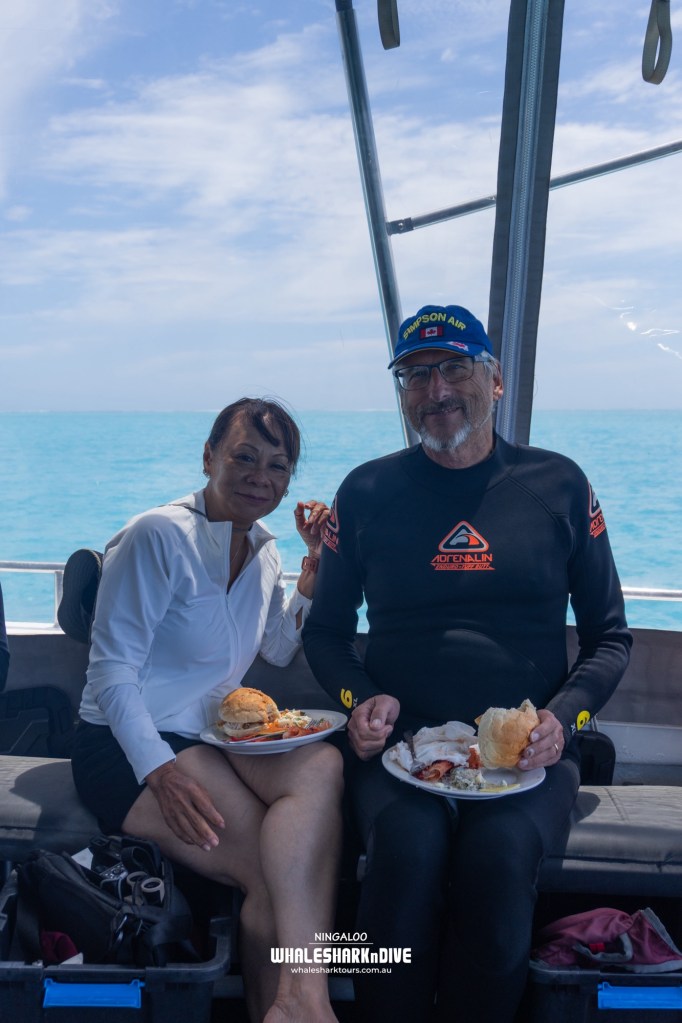
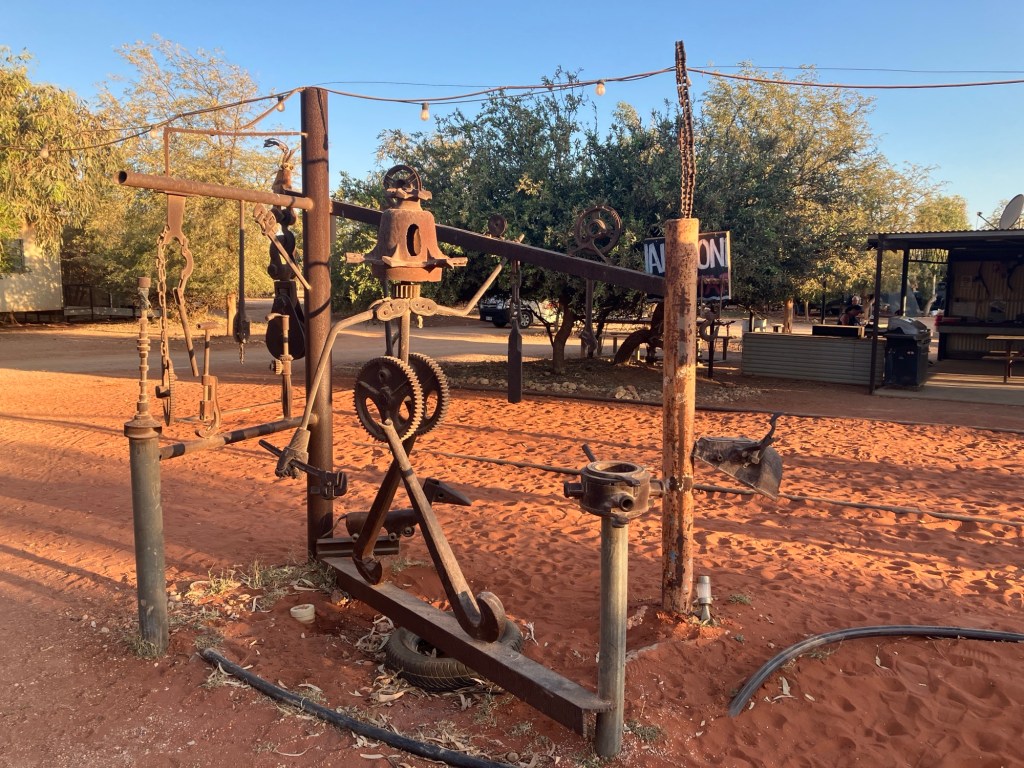
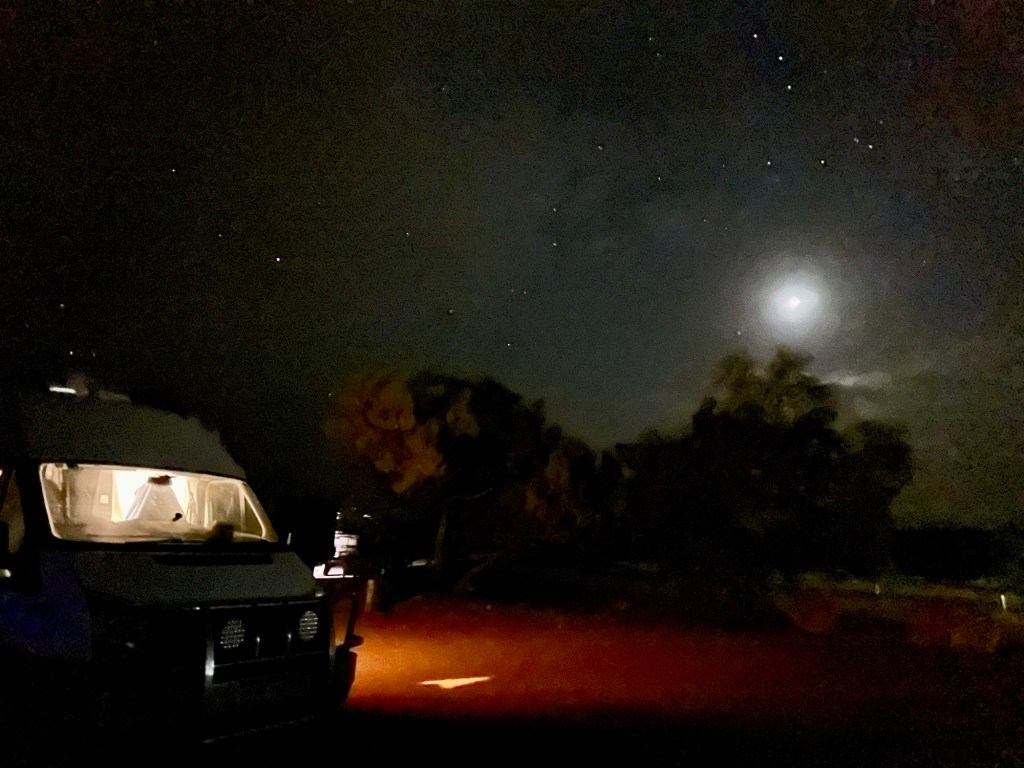
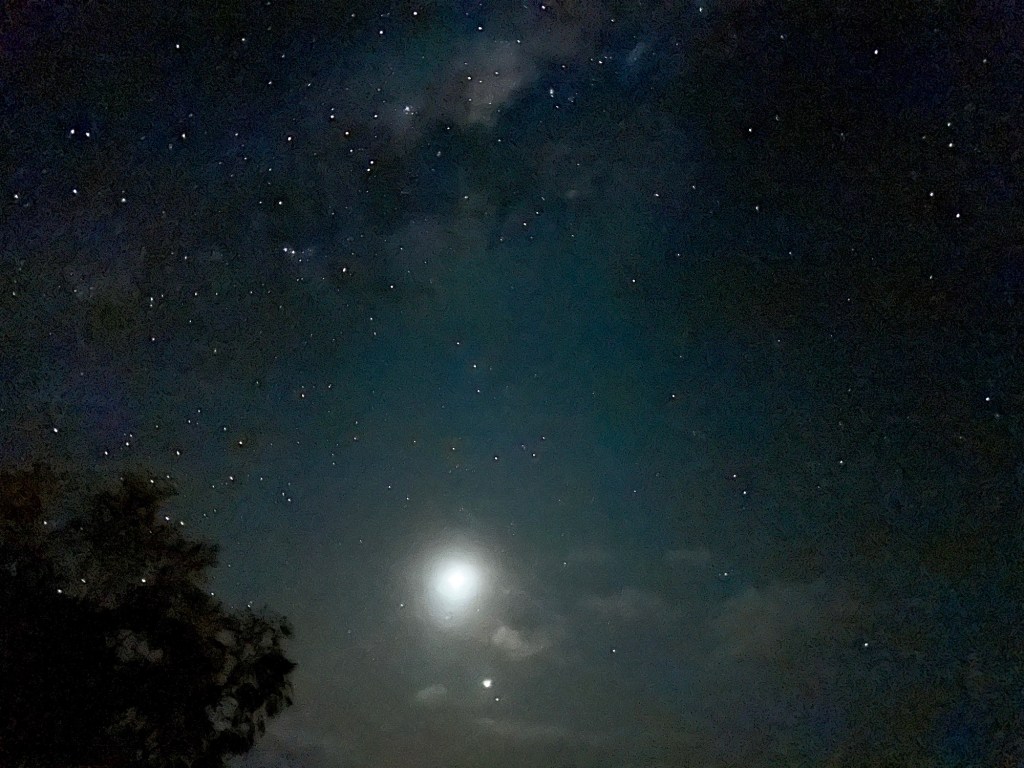
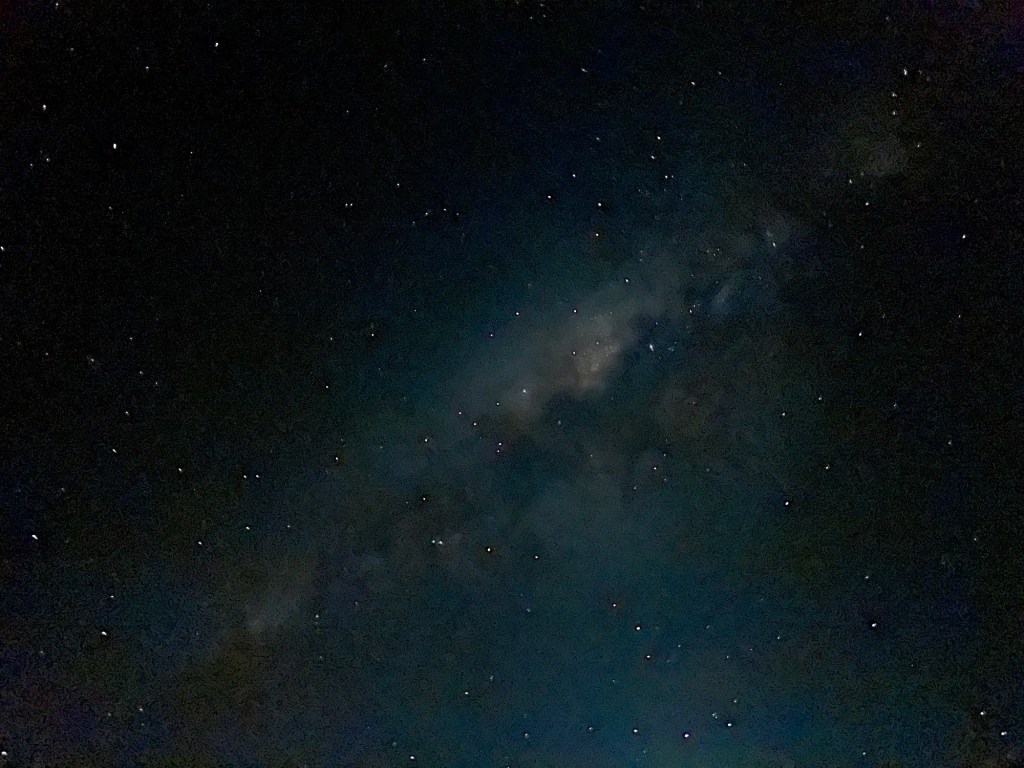
On Sunday 6/10 we boarded a boat tour to go out and swim with the whale shark. This is the largest fish in the ocean. It can reach up to 12 m long. Some whales are bigger, but they are mammals. We did see some humpback whales splashing into the water, but they were too far to photograph. The boat had 18 snorkelers on board, and we were looked after by 5 staff. In groups of 9 we jumped into the water to swim close to the whale shark. It was difficult to keep up with the animal who was just slowly waving its large tail. After 10 min the boat picked us up again and the next 9 could swim with the shark. As you can imagine it can get quite tiring jumping in and out of the water all the time. Rudy had to skip 2 trips but he had ample opportunity to observe and swim with the whale shark. The tour photographer recorded these events. We were incredibly lucky that the sharks were still around. Mostly they are already gone in September, and it is now October. Also, we were lucky that the water was so clear (and the sea calm) that you could see not only the shark but also manta-rays flying underneath you. Since all the campsites in the park by the beach were still fully booked, we left town and drove on to a large campsite at the Bullara Station, some 140 km back towards Hwy 1. This campsite is very popular. It has large sites spread out in the bush. There is a restaurant, and, in the morning, you can buy fresh scones and meat pies. Needles to say that Jamaliah bought some on our way out. Though this is a cattle farm, we were not bothered by flies and in the evening, we could sit outside till late watching the stars without mosquitoes. Amazing.
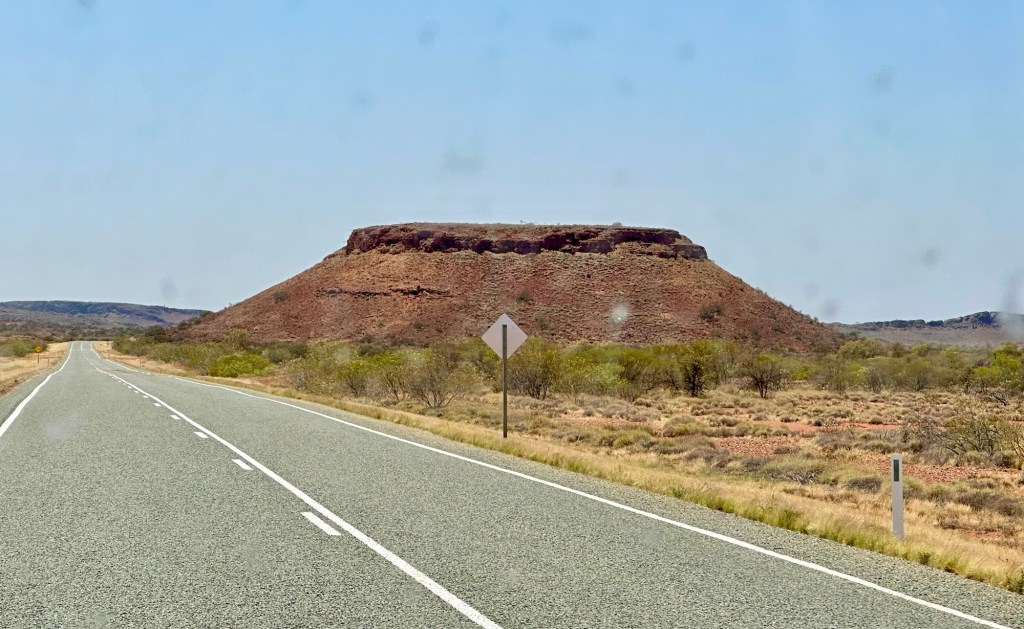
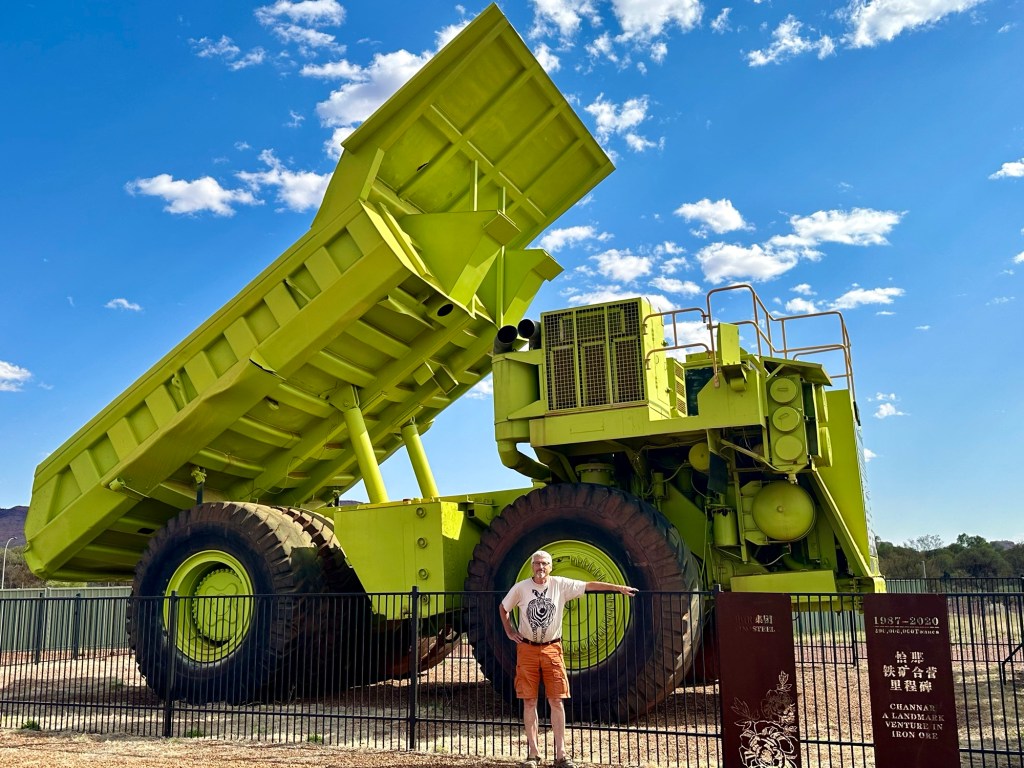
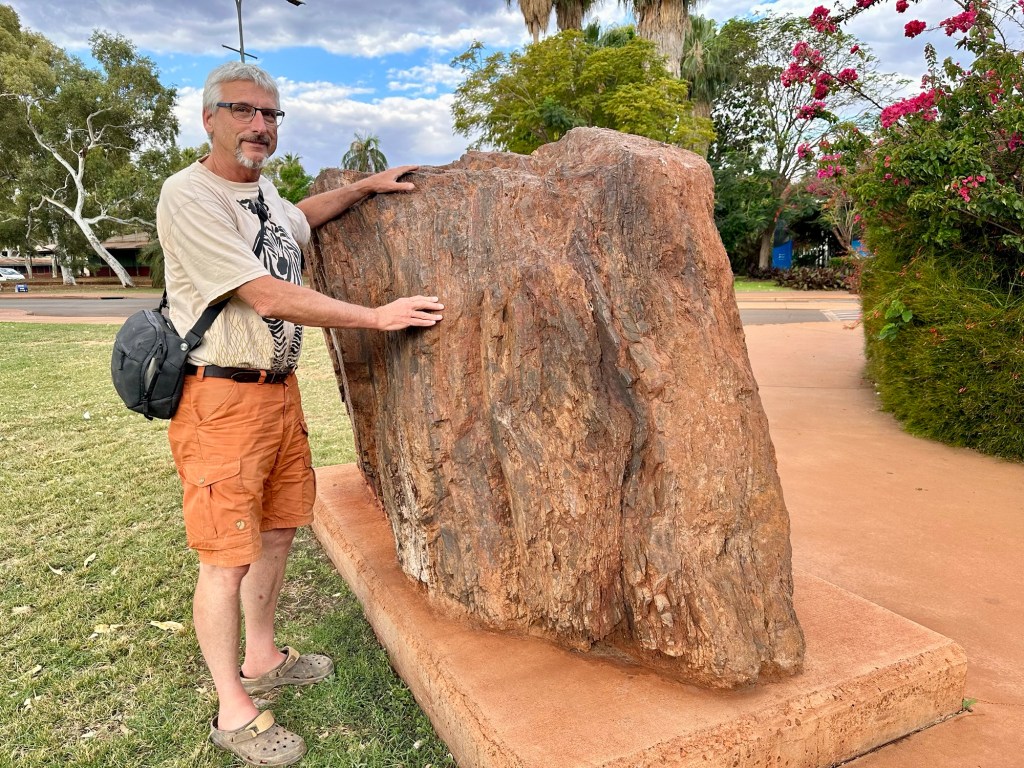
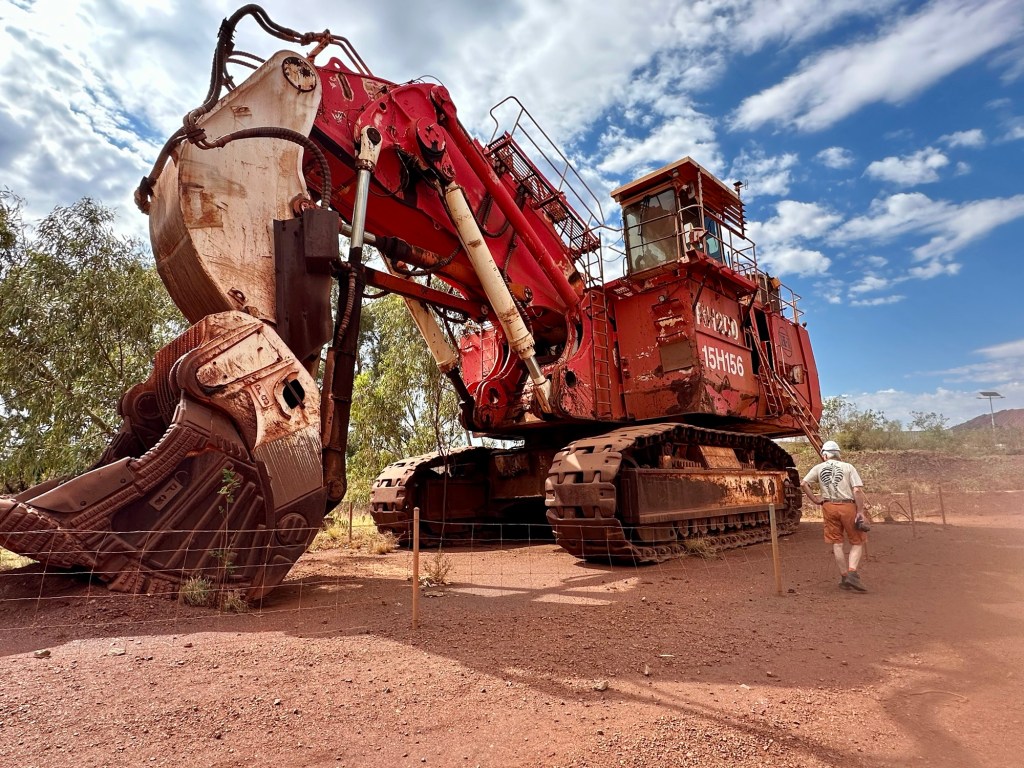
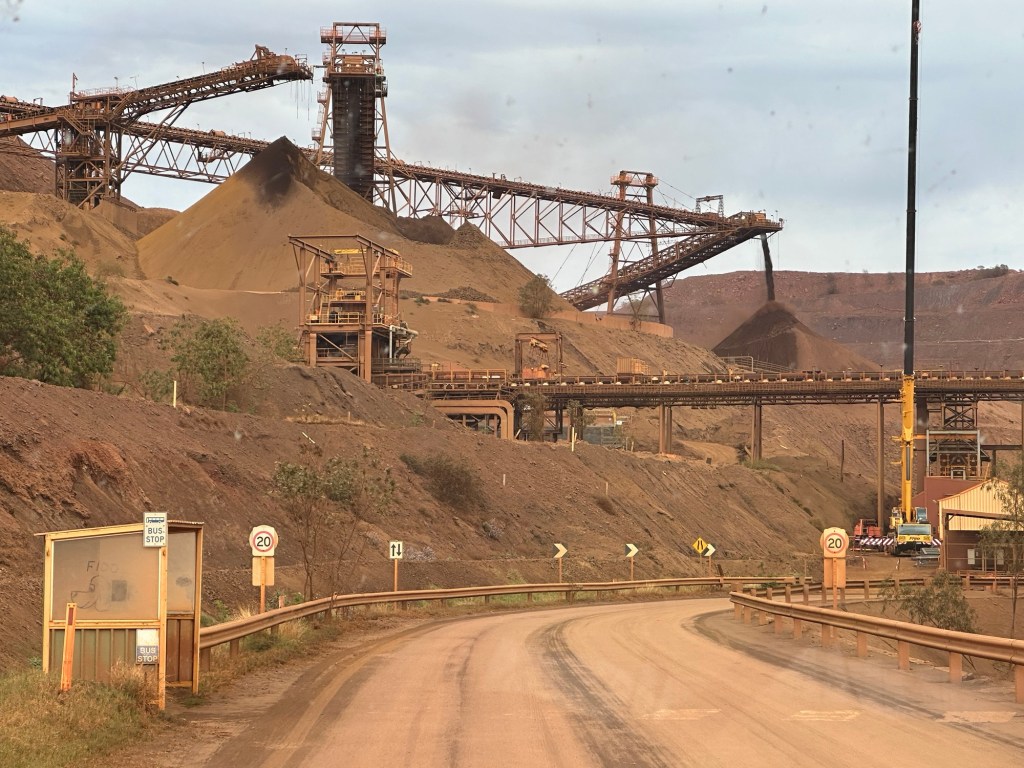
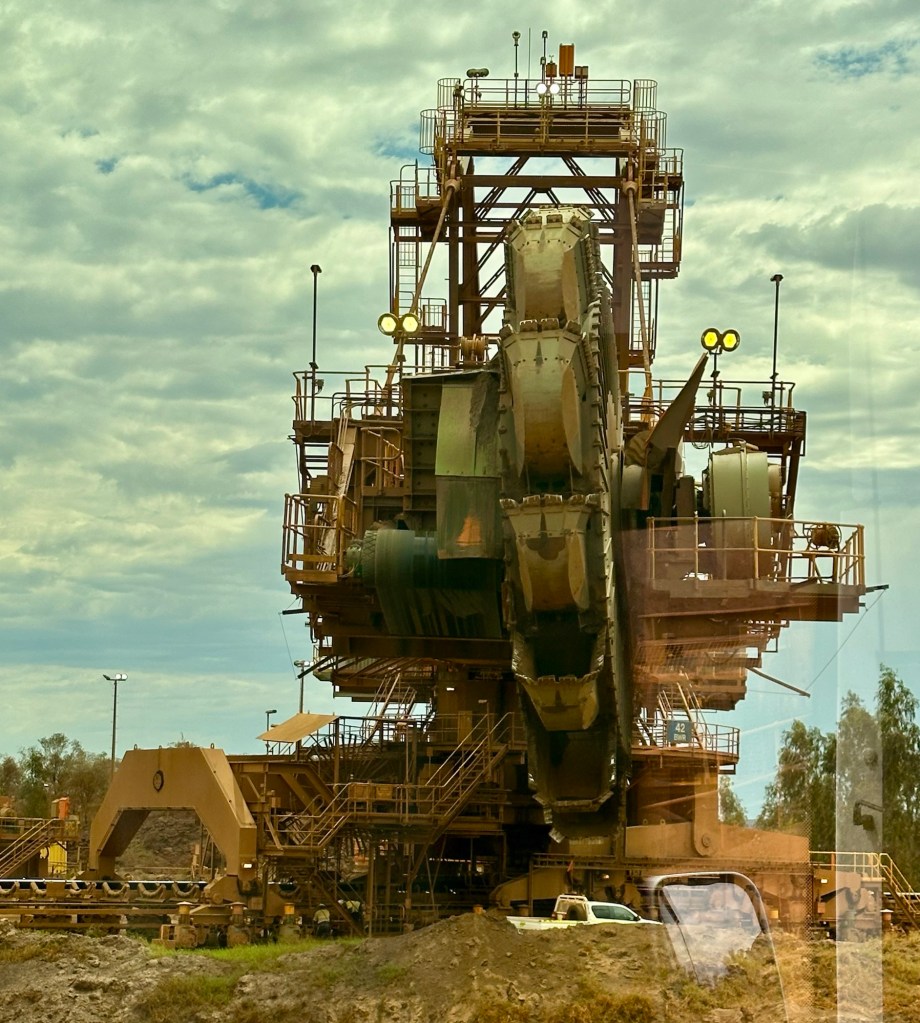
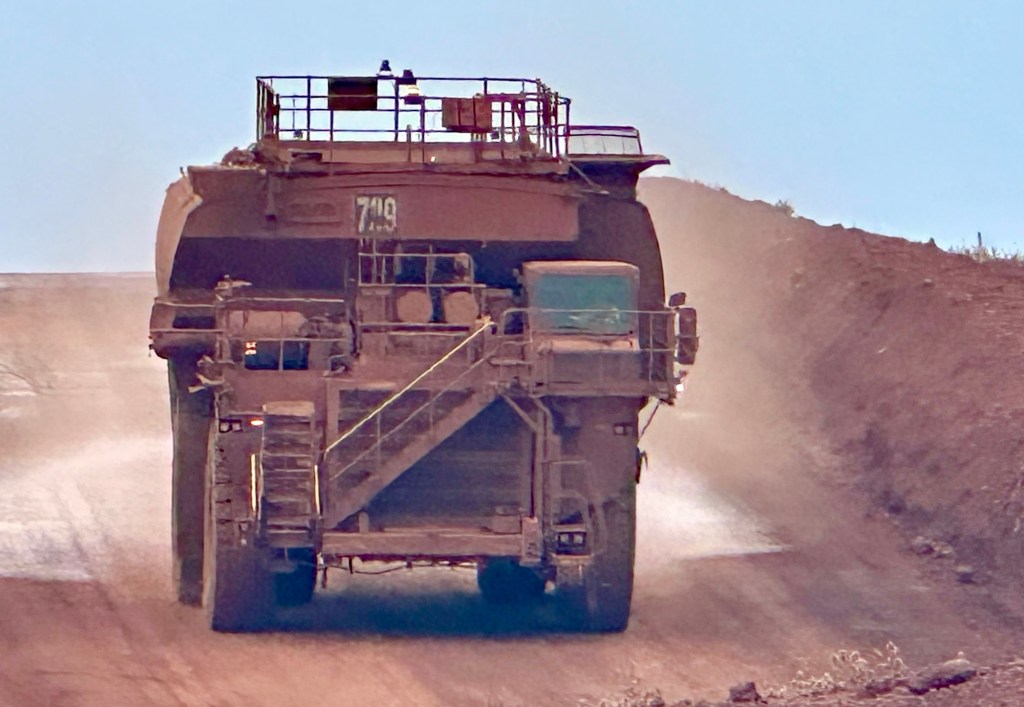
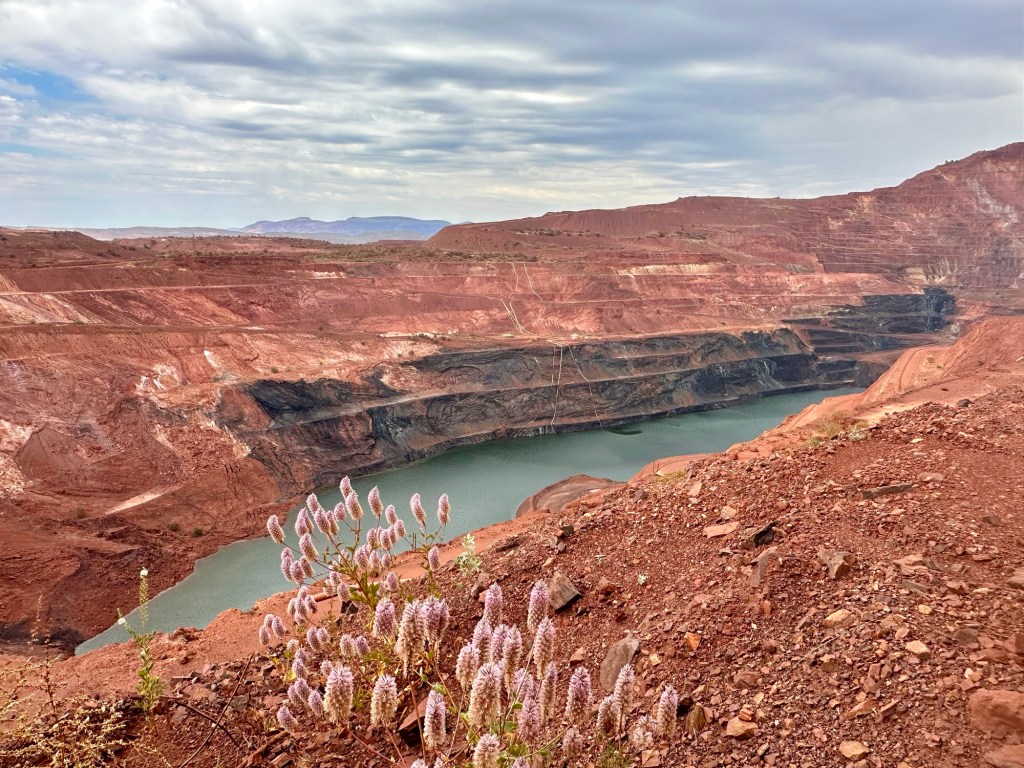
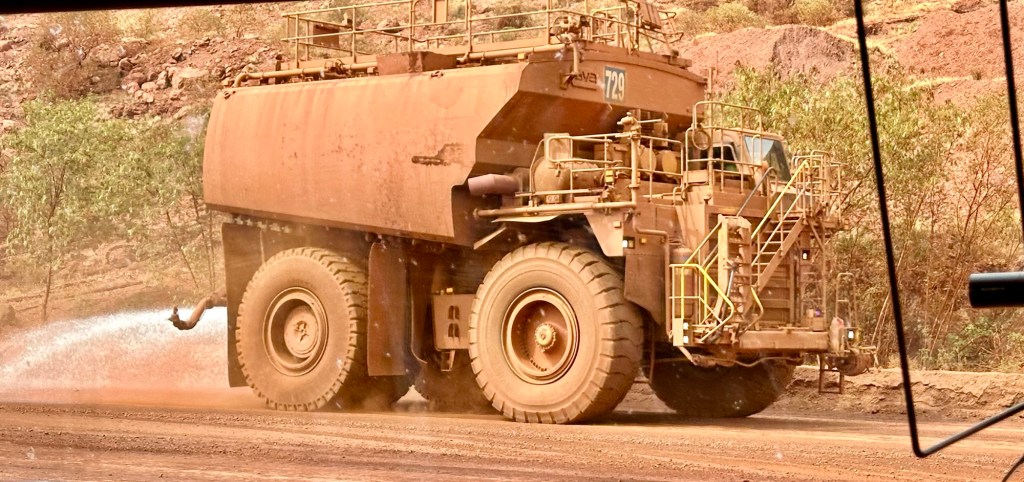
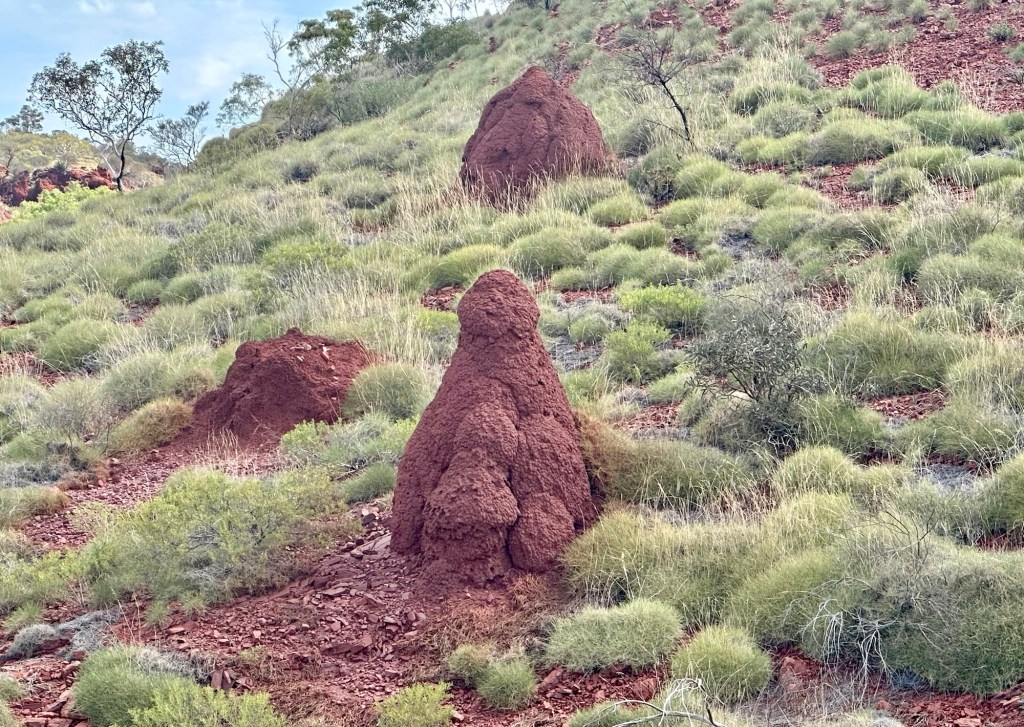
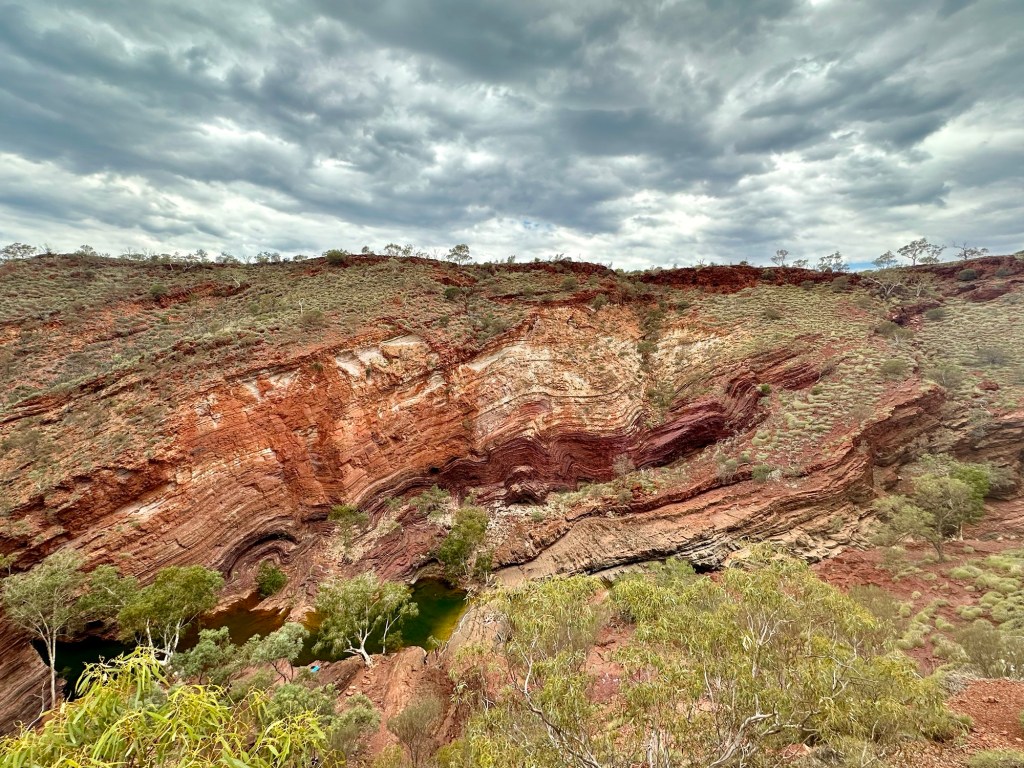
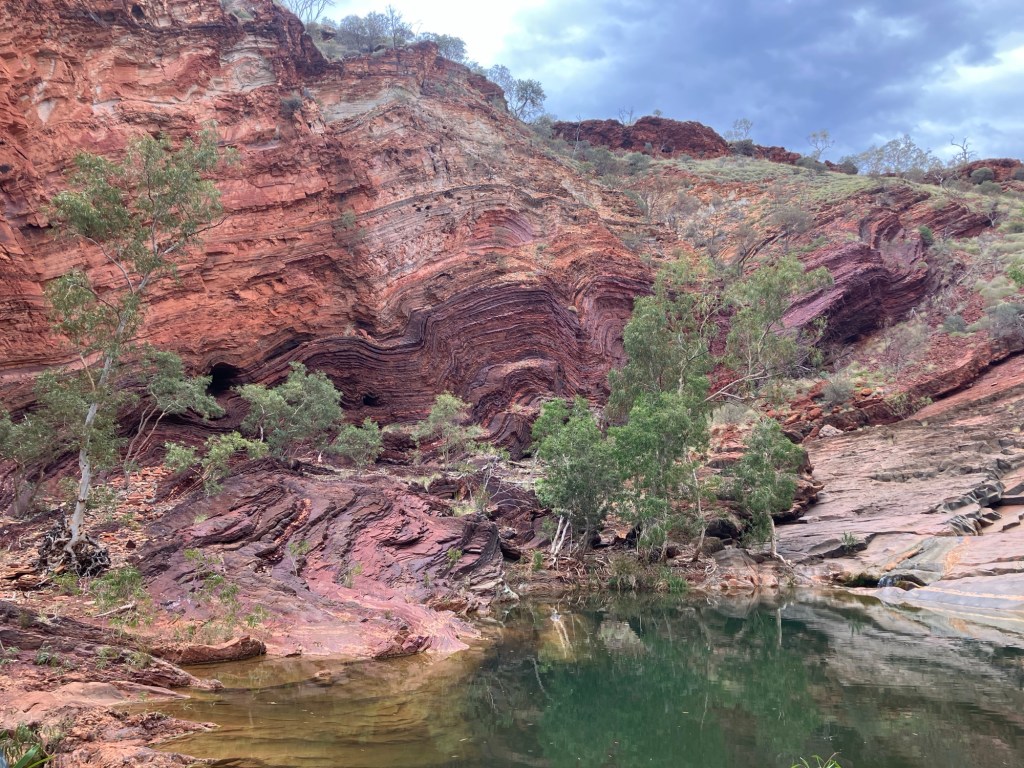
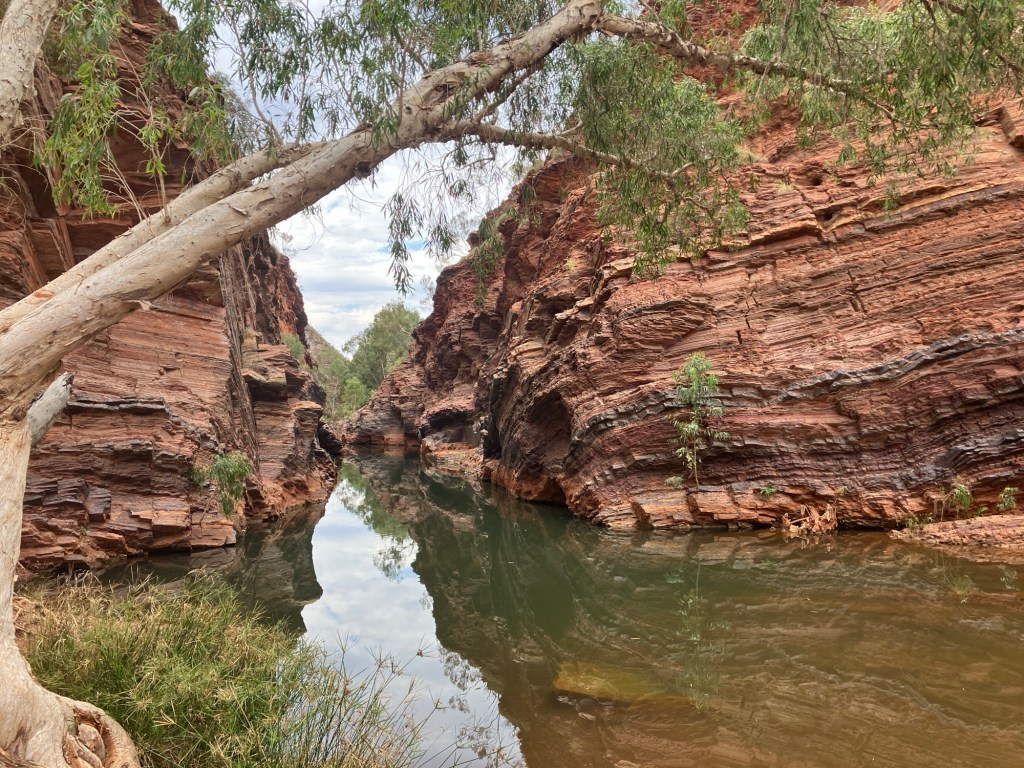
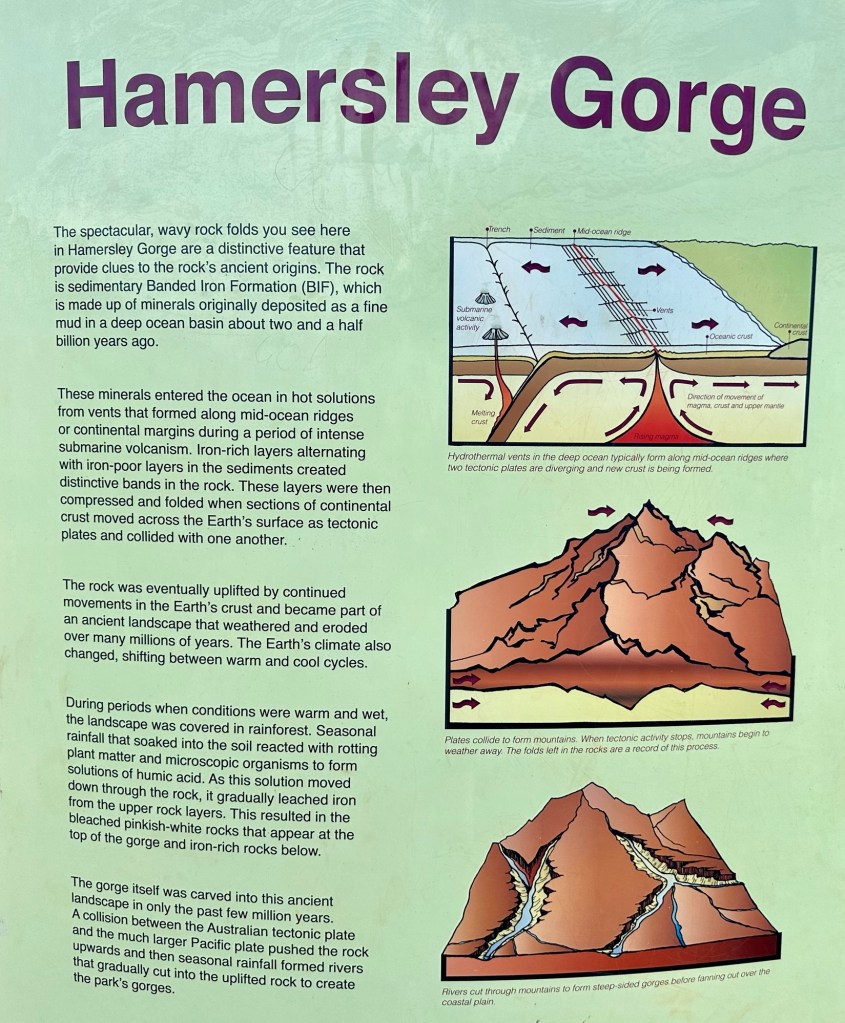
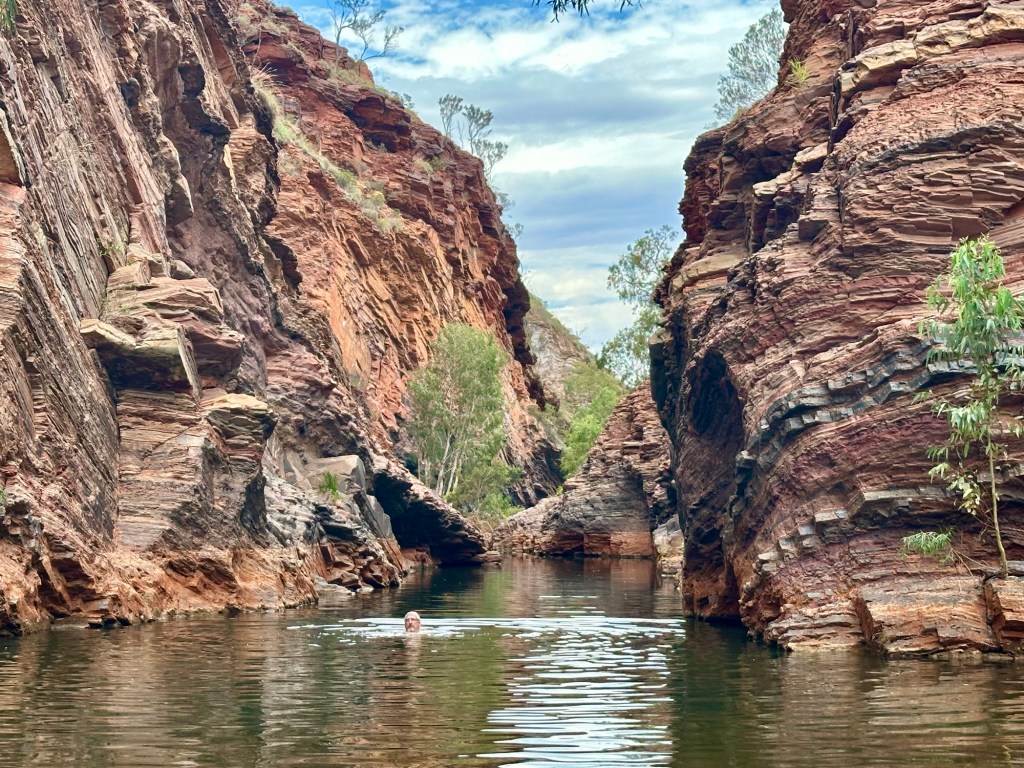
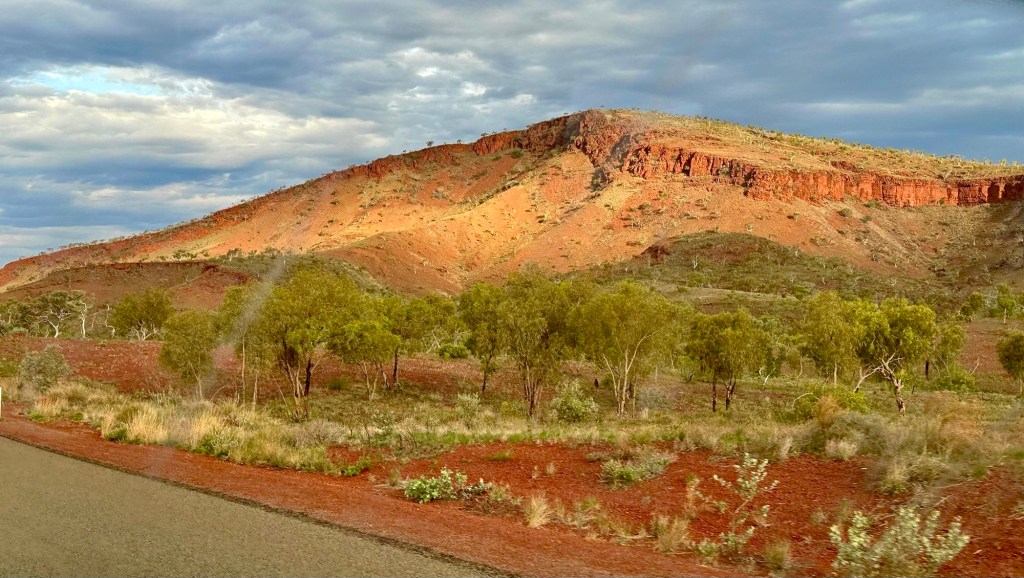
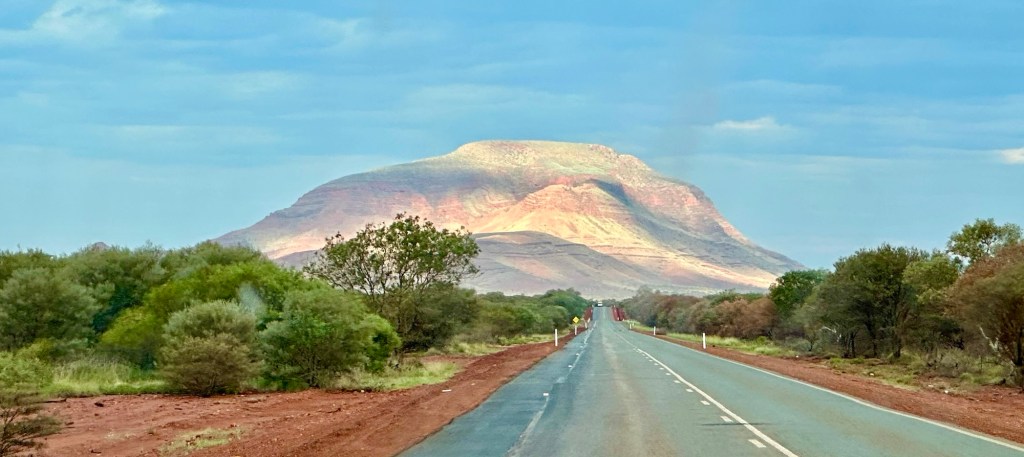
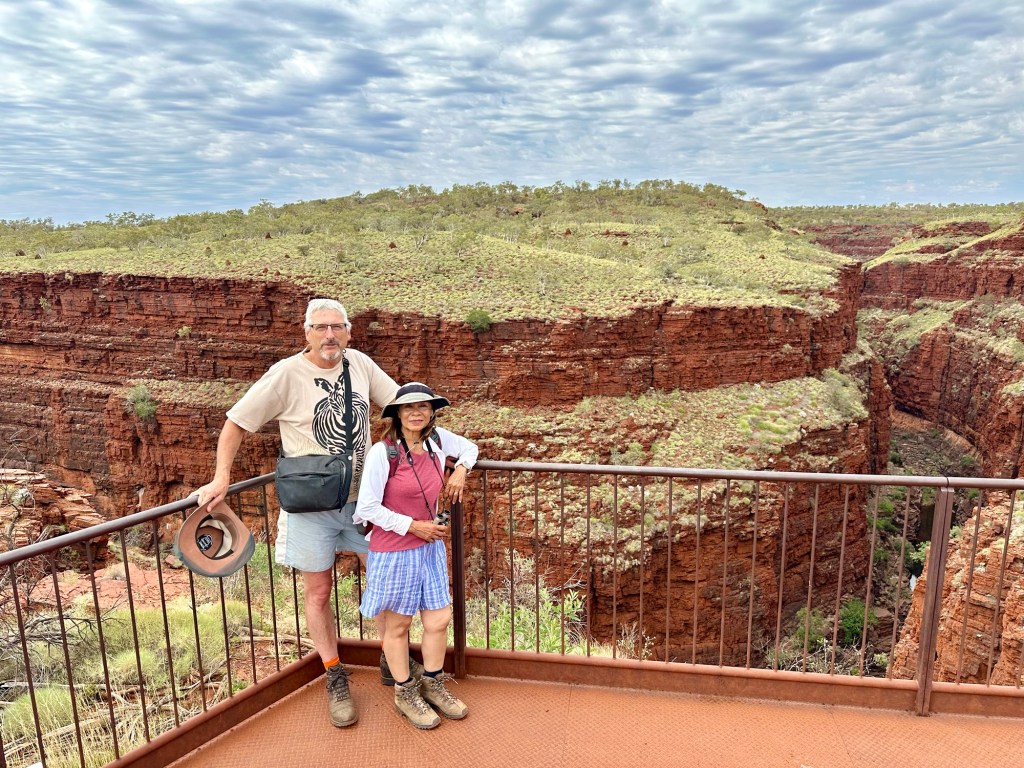
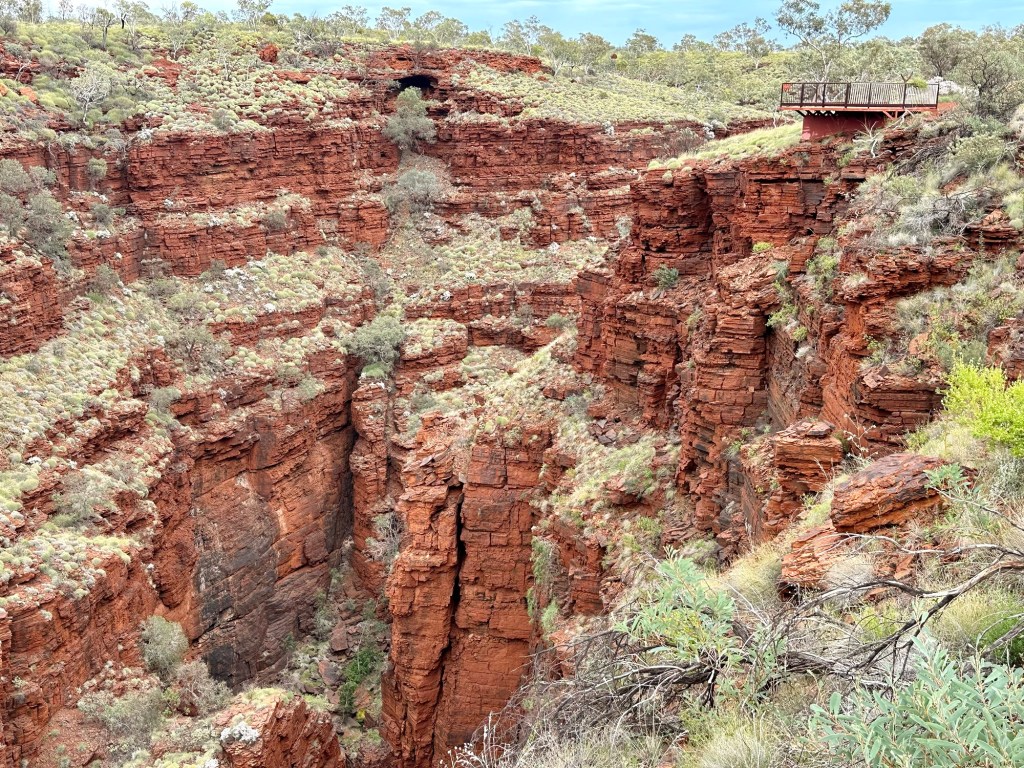
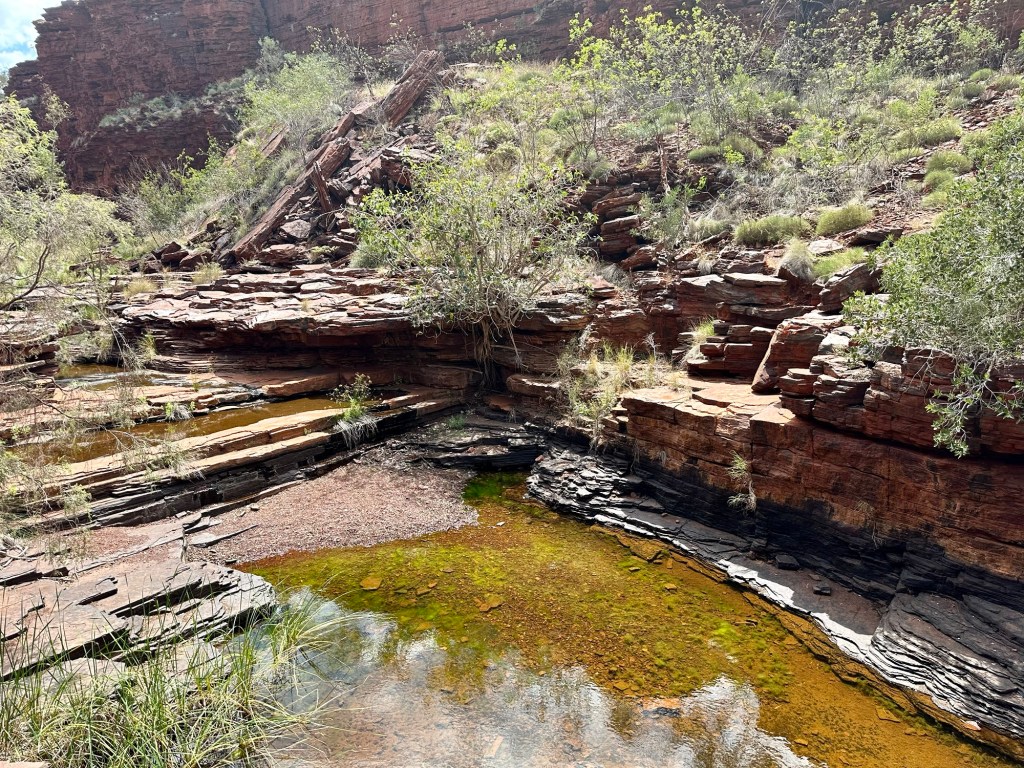
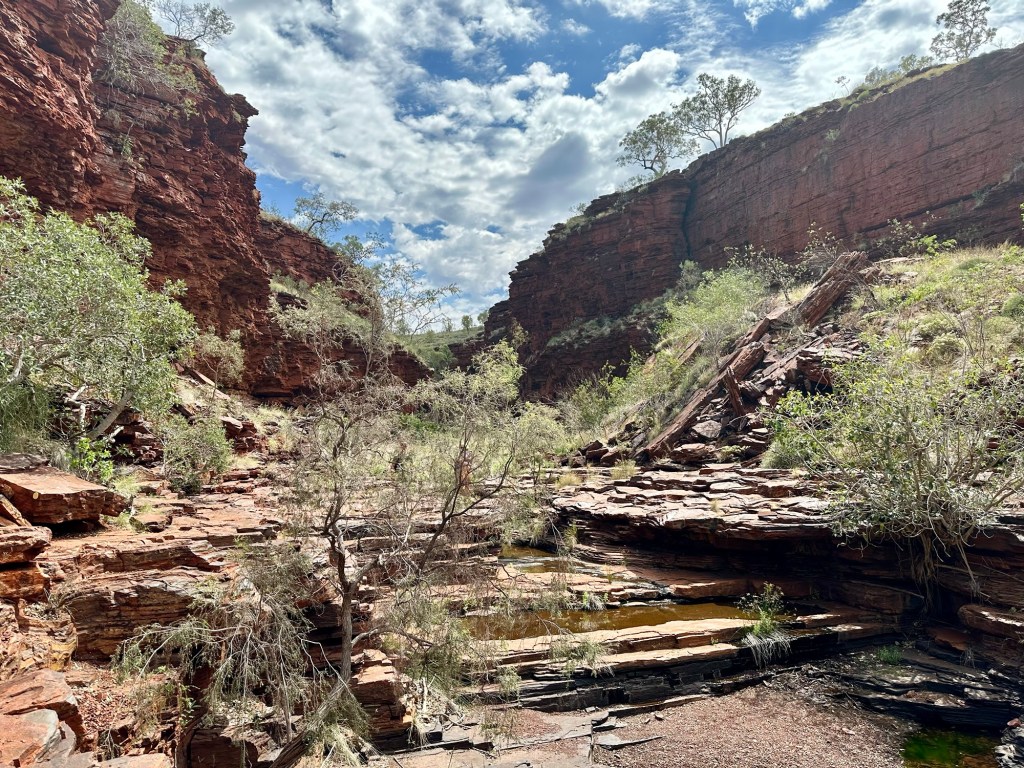
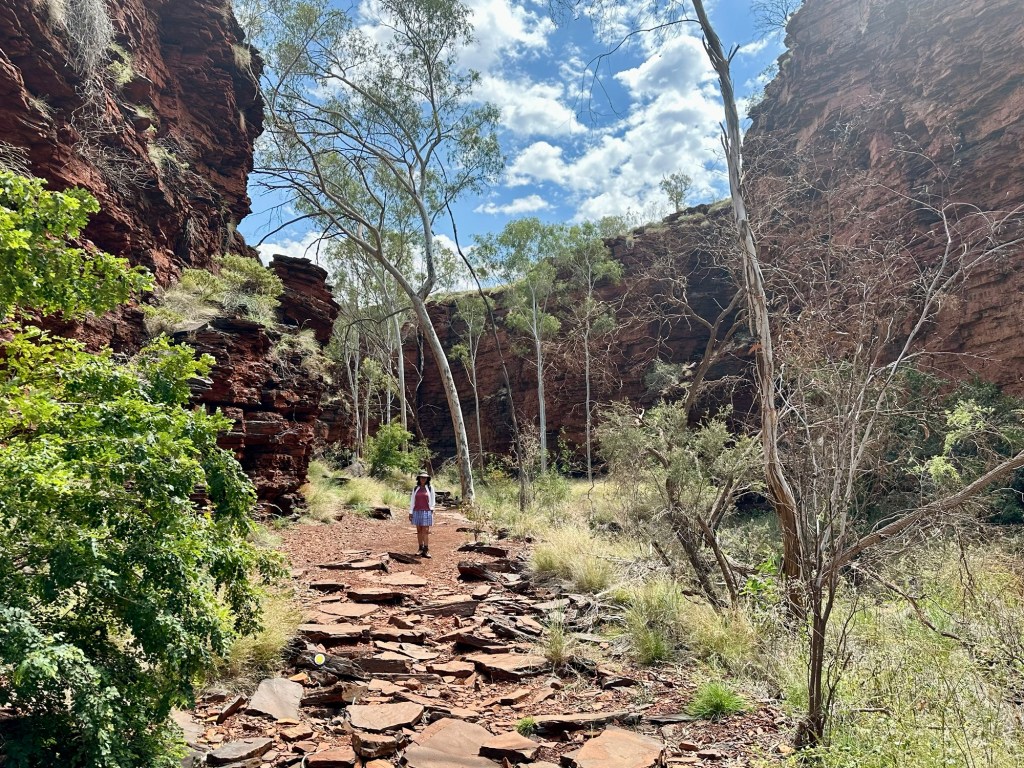
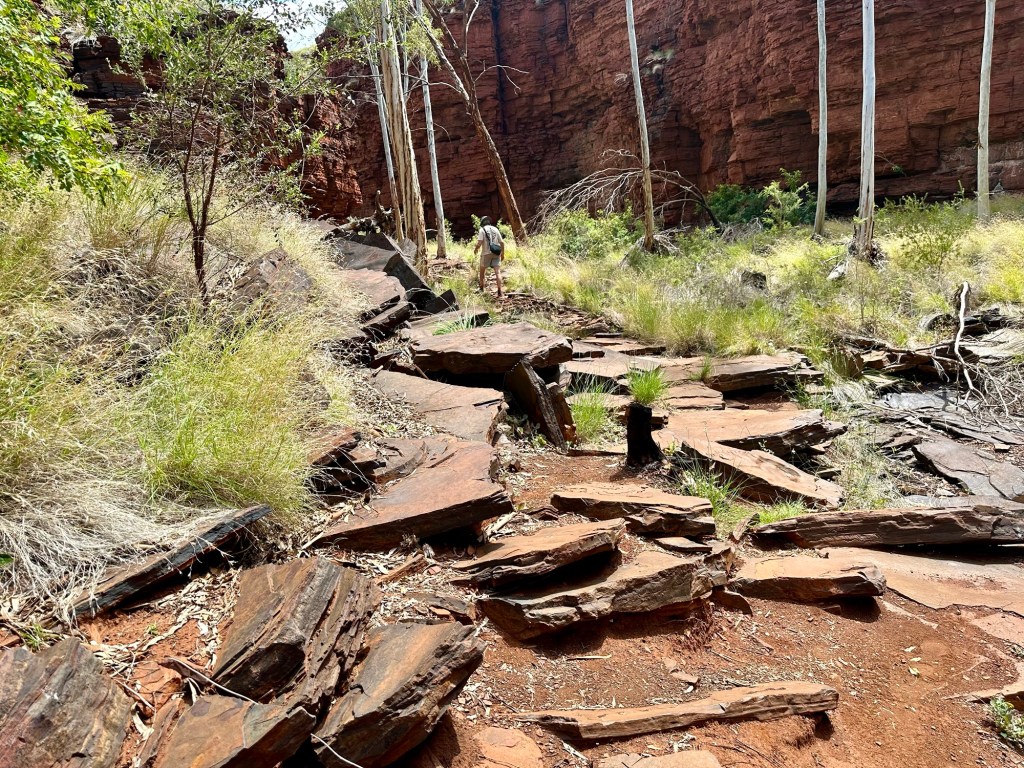
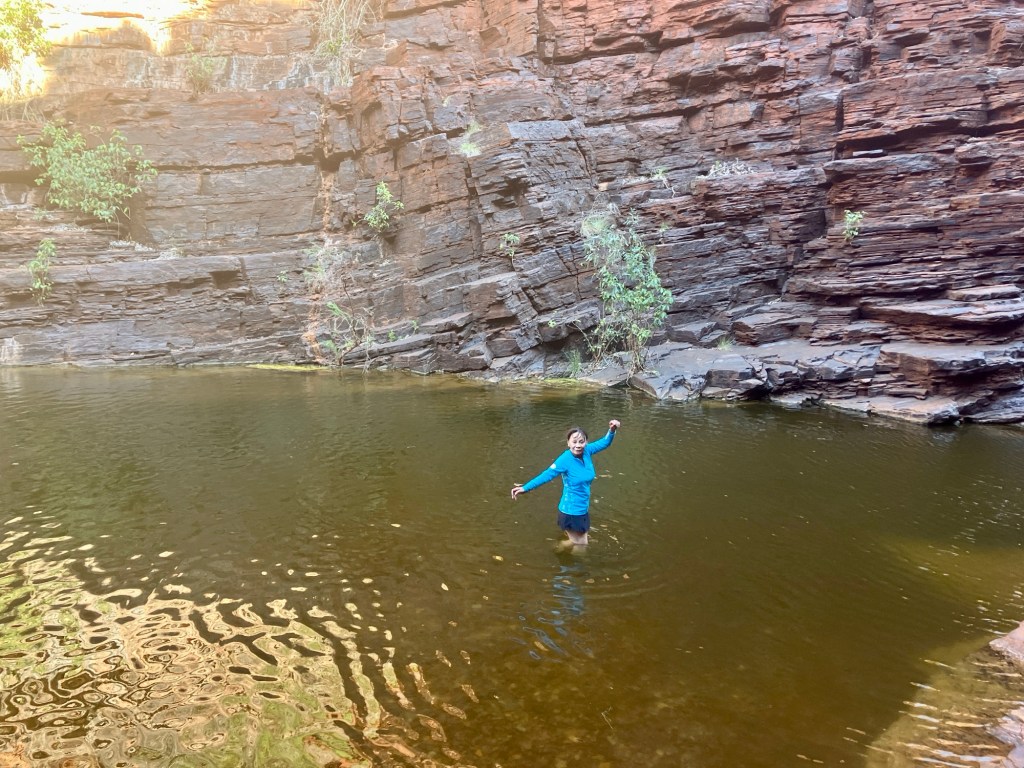
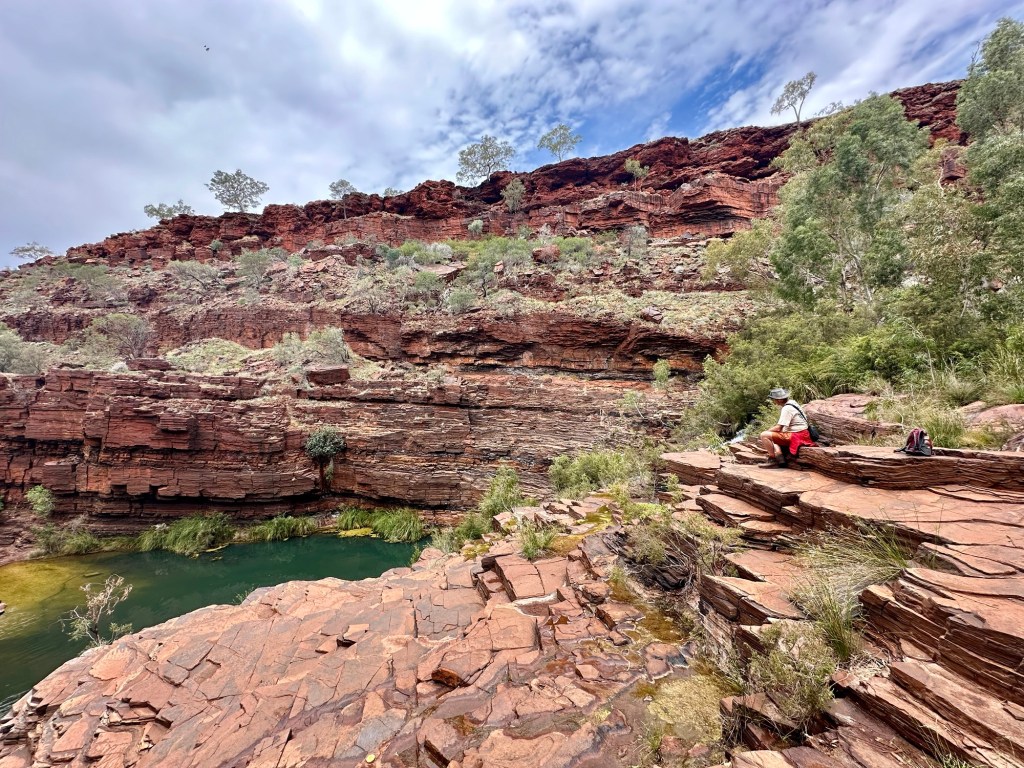
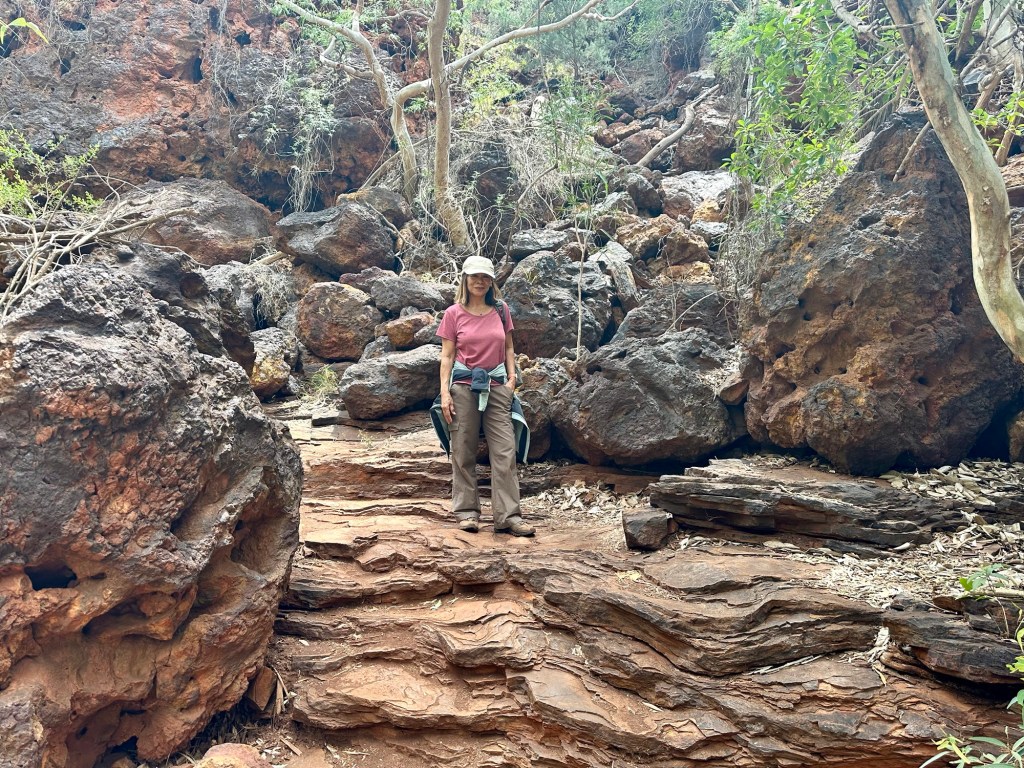
The iron ore mining town of Tom Price lies 540 km further inland. The road is good, and it starts to get hilly the closer you get to the town. The hills around Tom Price are primarily built up by hematite and magnetite. The concentration of these minerals is so high that they only have to blast the mountain, crush the rock, and send it by train to the coast for shipment overseas. We booked a mine tour to get a better look at the mining process. At one point there was a deep hole in the ground where they had followed a high-grade seam till it ran out. Many of the hills/mountains around the mining area form the Karijini NP. We are spending now our second night at the park’s Eco Campsite. The main attraction is the many deep gorges the water streams have cut into the deep-sea sedimentary hematite rock over millions of years. We have now visited 4 of them. In 2 we climbed down for a refreshing swim and one we climbed down and walked along the gorge floor out of the mountain. Given both Jamaliah’ hernia and my condition we are immensely proud of these achievements and enjoyed them.
The following day we drove to the visitors center. This building is made of irons sheets in the form of a serpent. This is a mythological figure for the first nation people. There were also stories and artifacts in the museum. Still we have hardly seen any of them. The park is on their land, and they are represented in the park management. We only saw one lady behind the till.
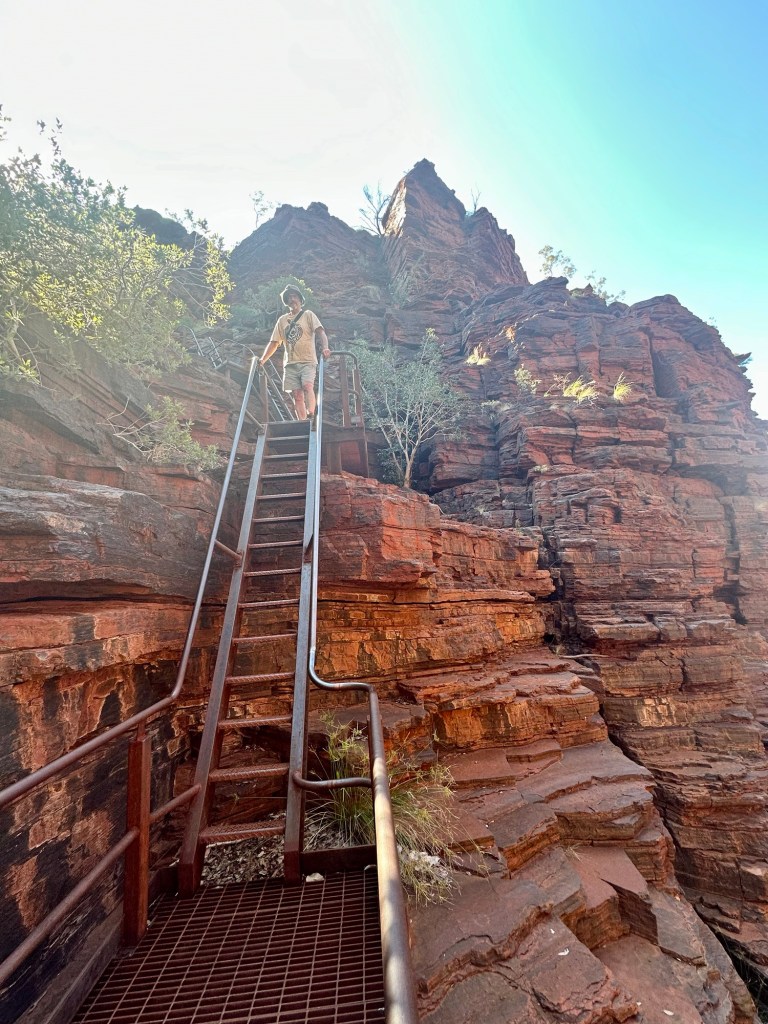
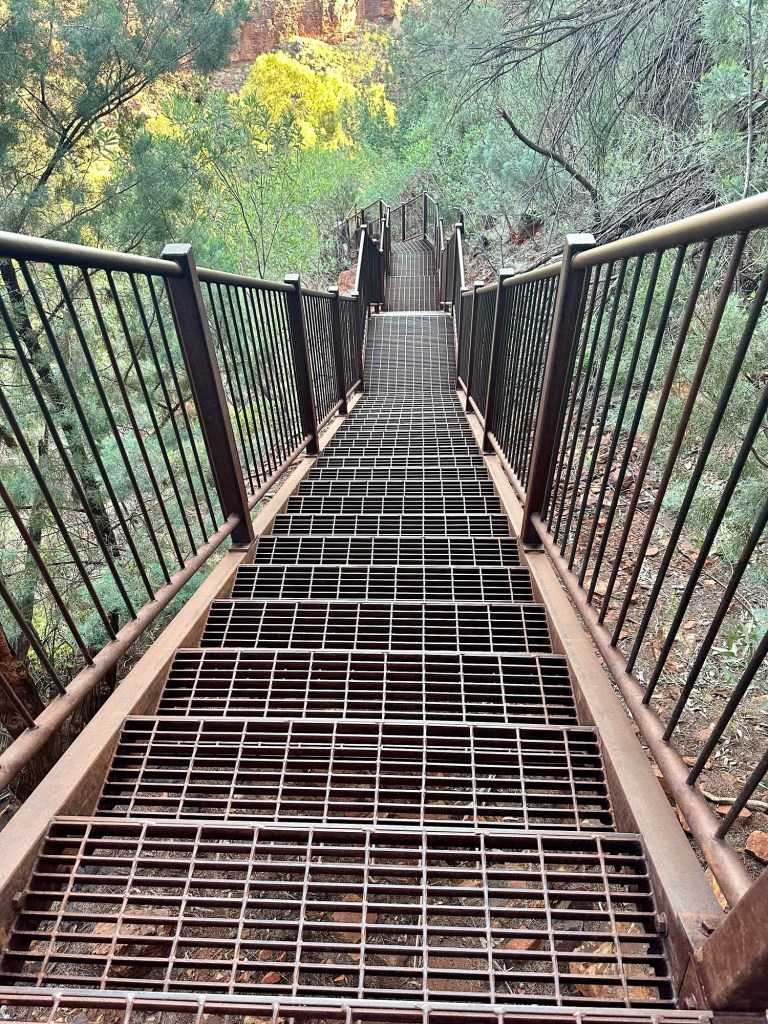
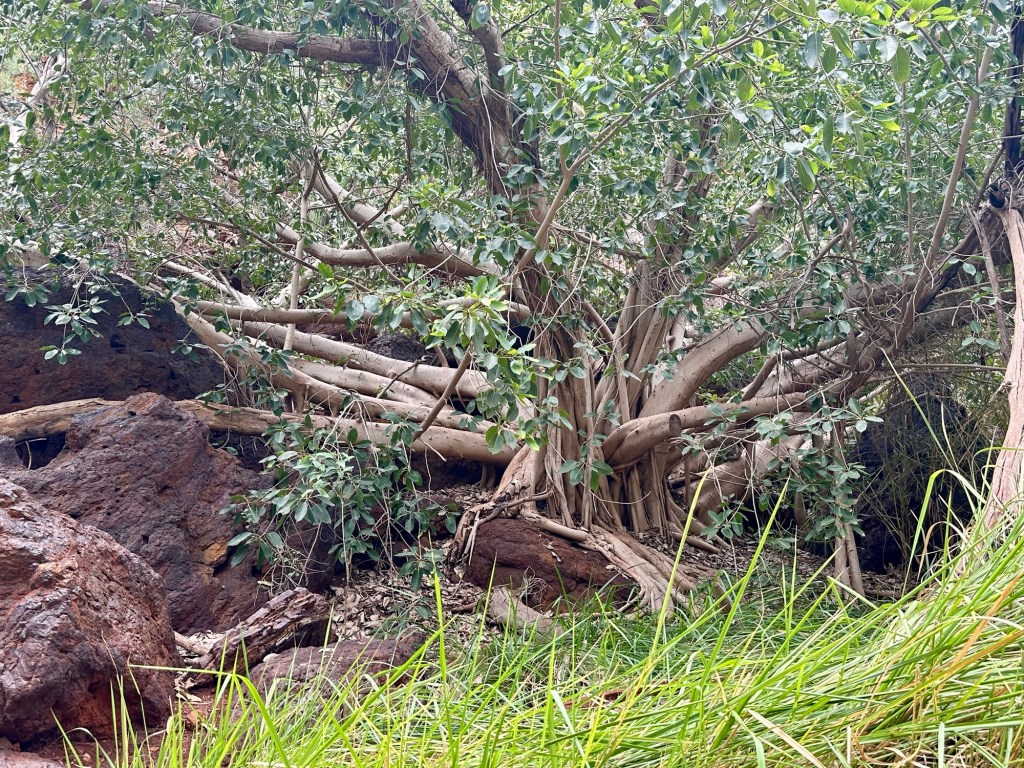
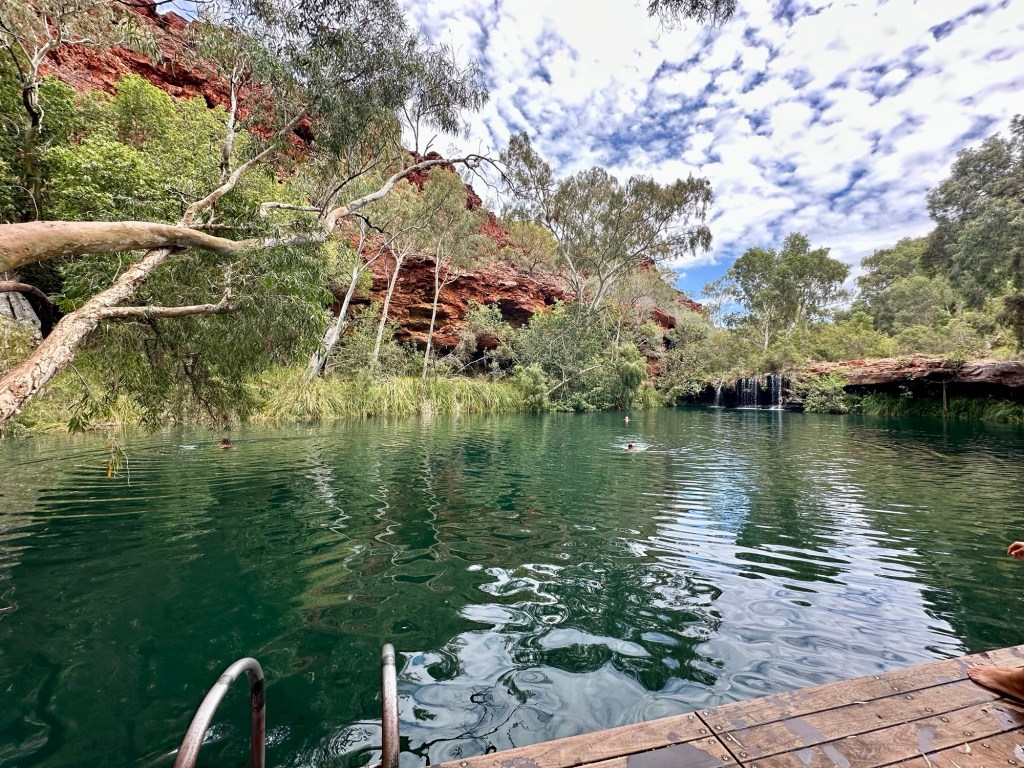
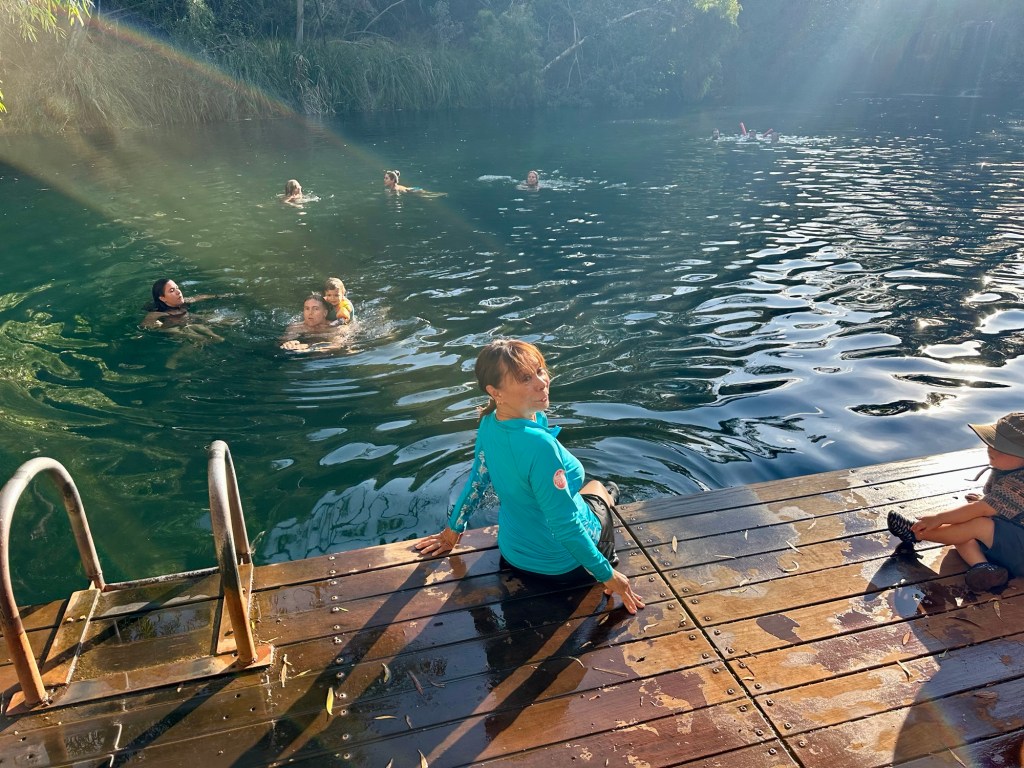
A bit further up is the second campsite ion the park. We stayed overnight there and made 2 trips to the Dale’s gorge and its swimming pools. The first without our bathing suit as a reconnaissance and the second in the afternoon with. You had to climb down a ladder with 300 steps to reach the bottom of the gorge. The fern pool is accessible by a short walk through a forrest on the floor of the gorge. It is a popular swimming place with an overhang and waterfall. Jamaliah had brought along her float and after overcoming the scare of the small fish-eating nibbling at her feet, she also took the plunge. The sun was just at the right spot and shinning on to the water. A magical experience.















 Rudy Welling's Travels
Dat is wel heel spectaculair om met walvishaaien te zwemmen! Jullie hebben wel geluk, want op IJsland lieten de walvissen zich ook zo goed aan jullie zien. Geniet van jullie mooie reis, wij genieten op afstand mee.
Groetjes, Ton en Elly
LikeLike