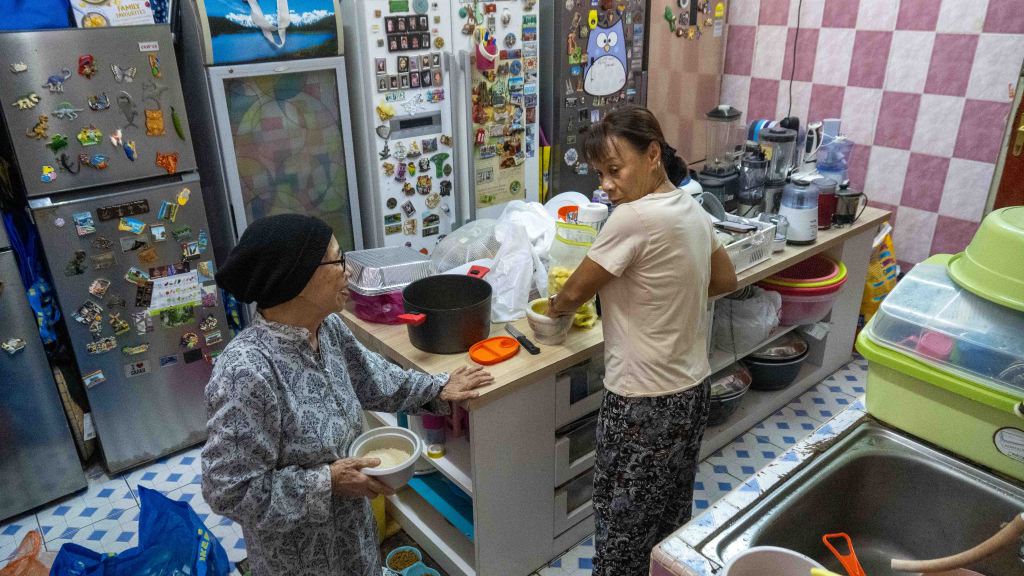
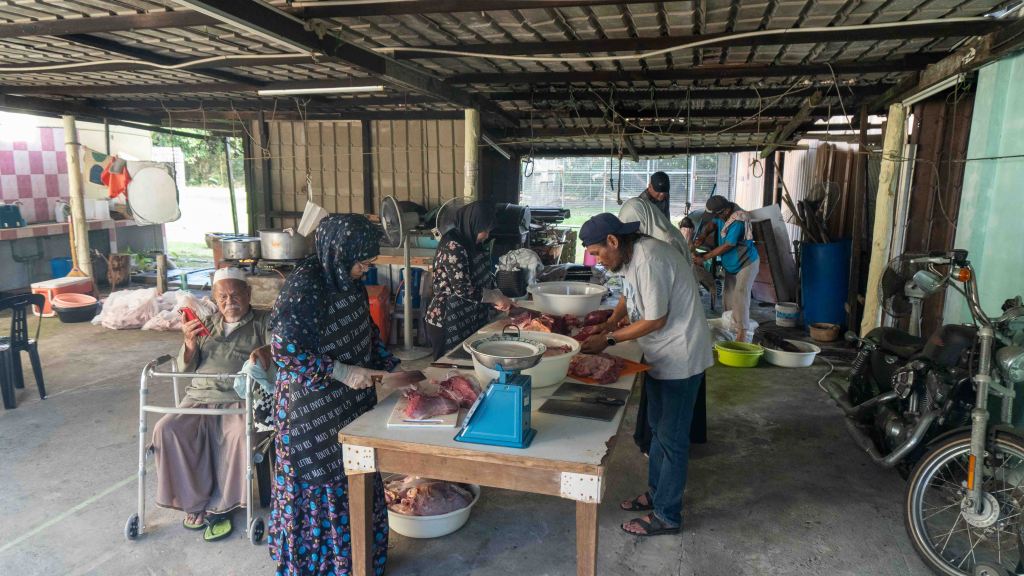
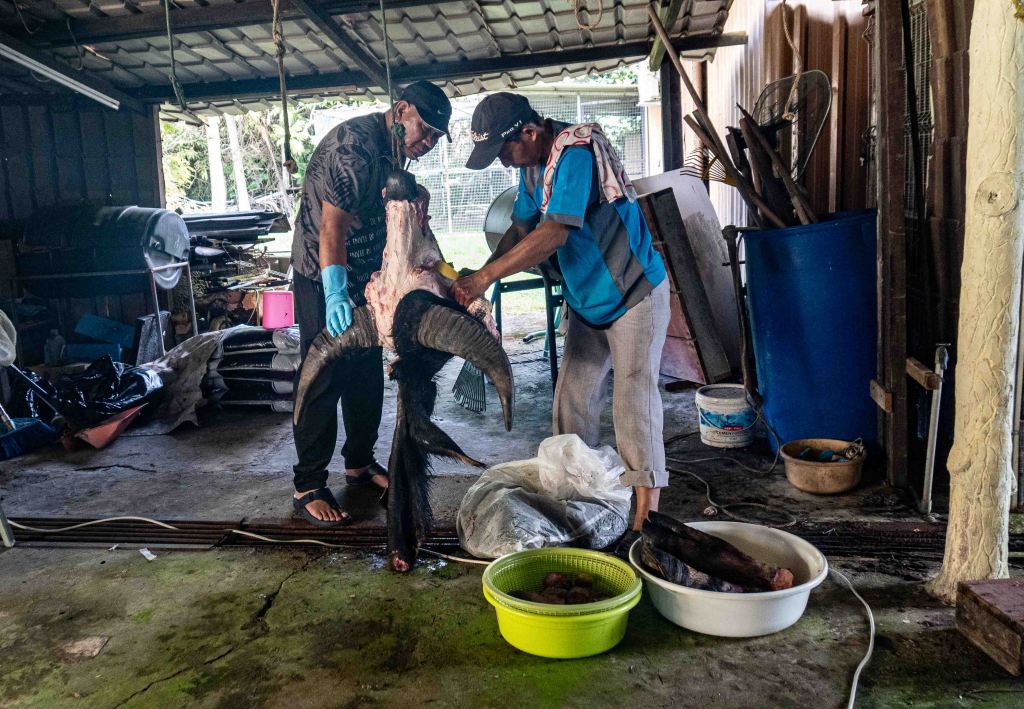
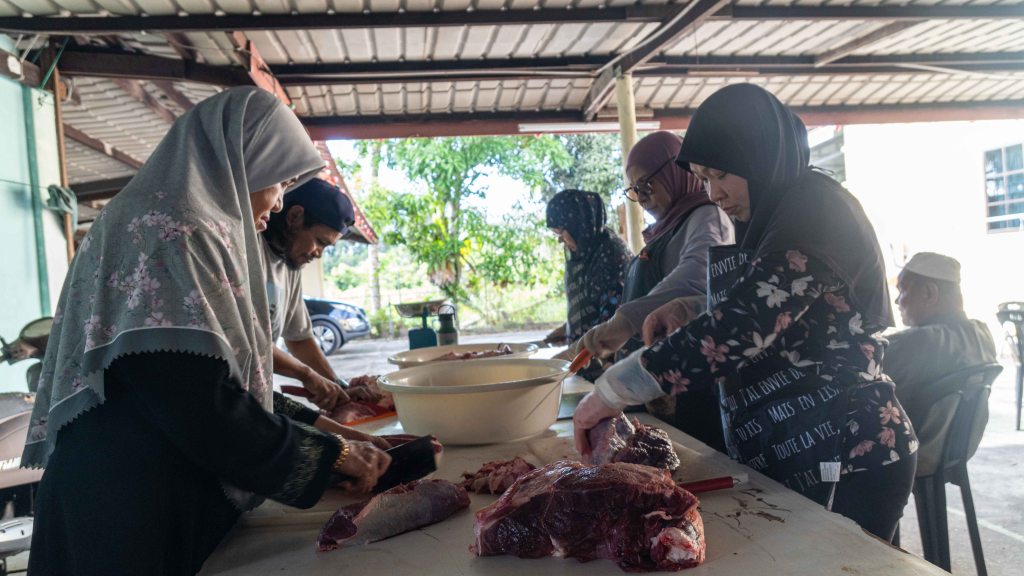
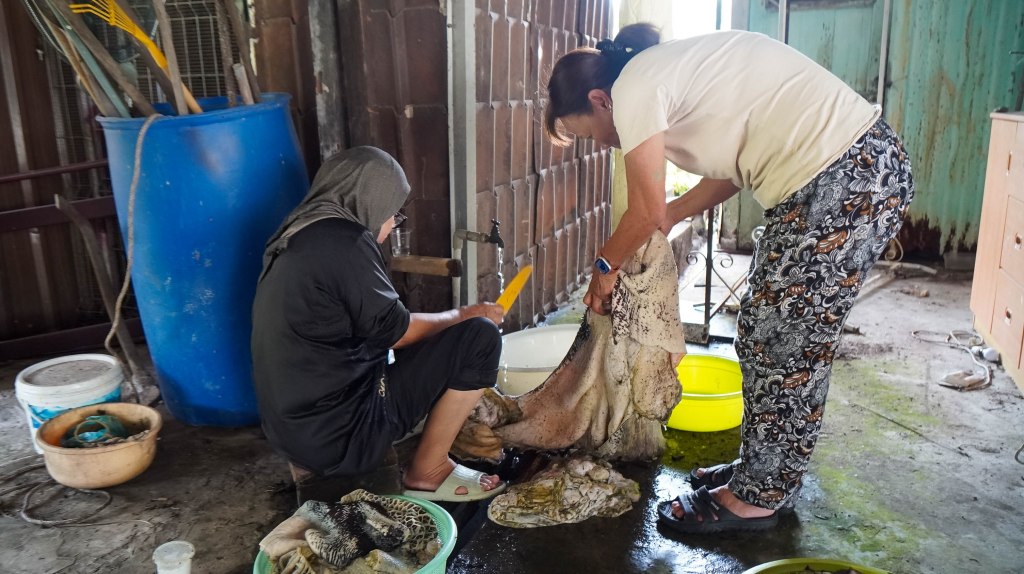
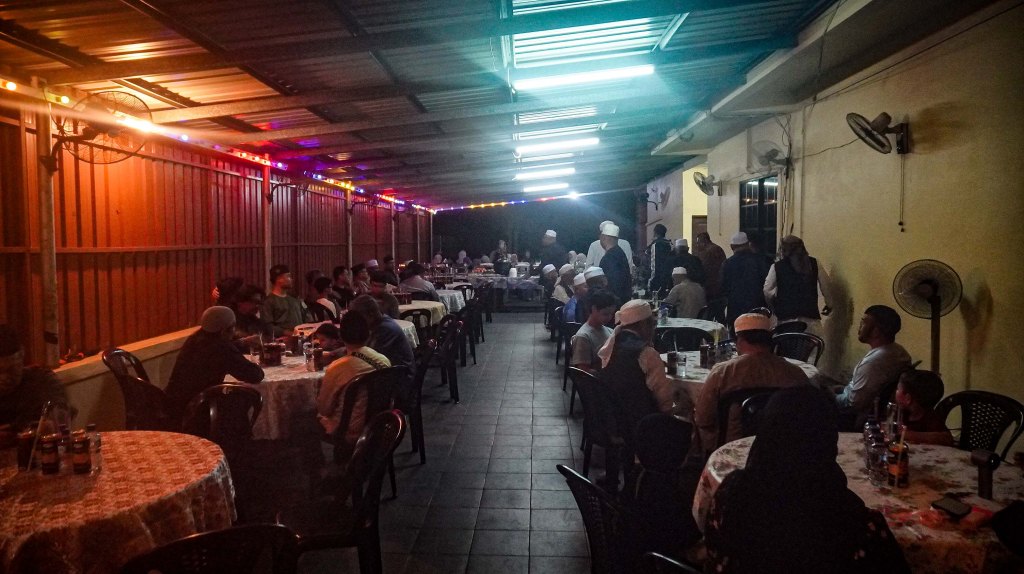
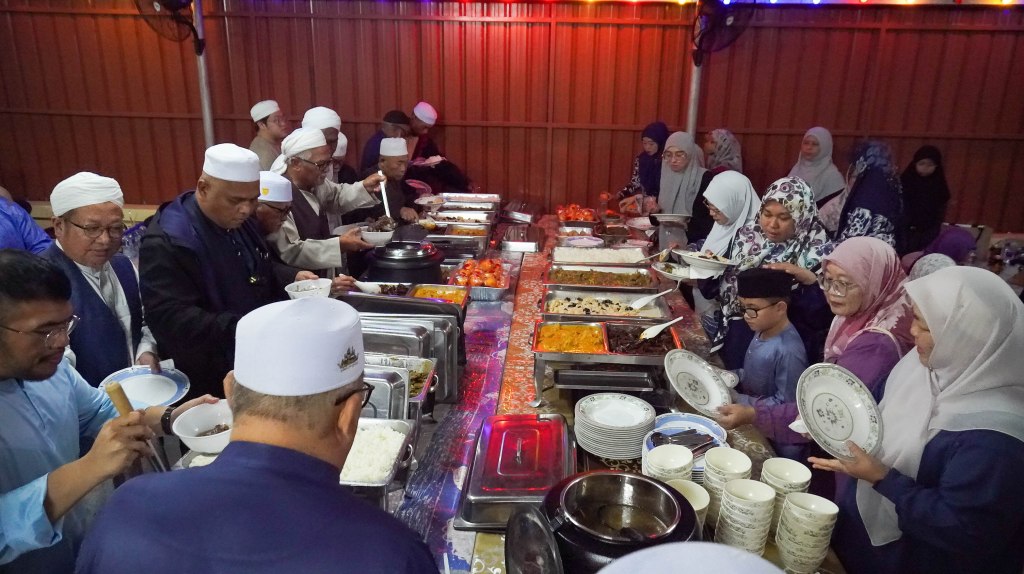
We were picked up from the Airport in the capital Bandar by Jamaliah’s sisters and brother-in-law and driven to Bakong on the coast at the other side of the country. Brunei is a small Sultanate on the North East coast of the island of Borneo. It is only 80 km to Jamaliah’s parents house where we spent the next 14 days. The first few days were filled with family visits and preparation for the celebration of Jamaliah’s parents’ birthday (95 and 88 years old). This has now become a tradition whereby a cow is slaughtered and the meat given to relatives and friends who join for a meal under the carport and extra pavilion set up outside the house. Large tables were set out to accommodate the 150+ guests. Jamaliah’s father supervises the preparation and boiling of the traditional soup, while the rest of the meal is catered for.
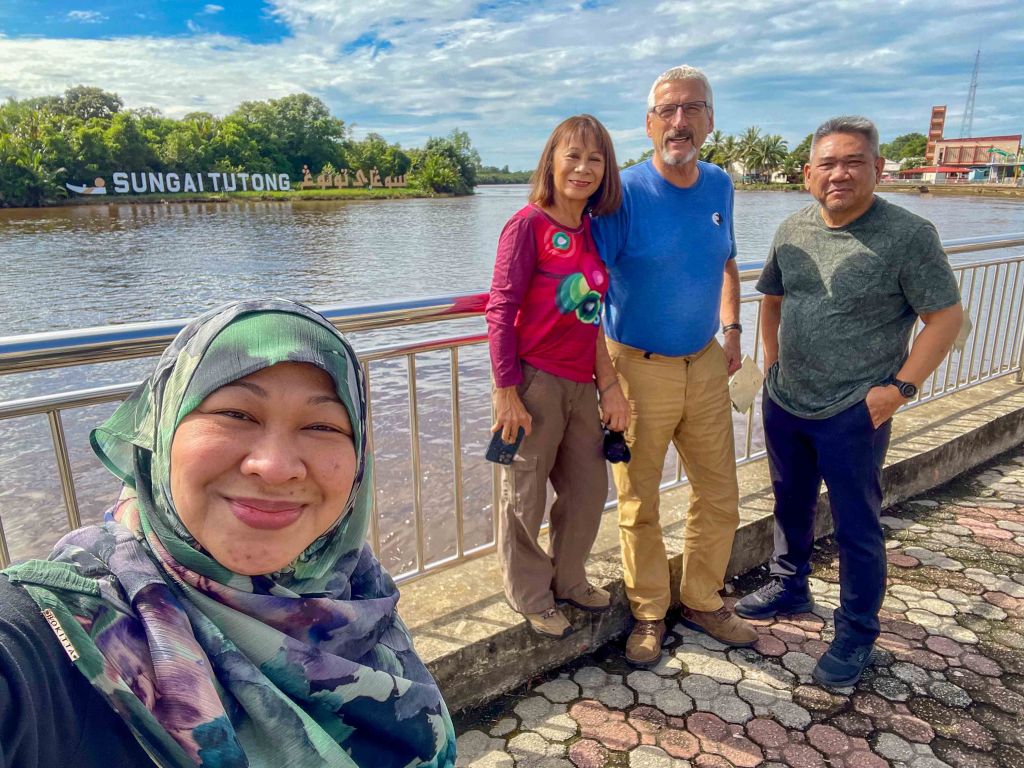
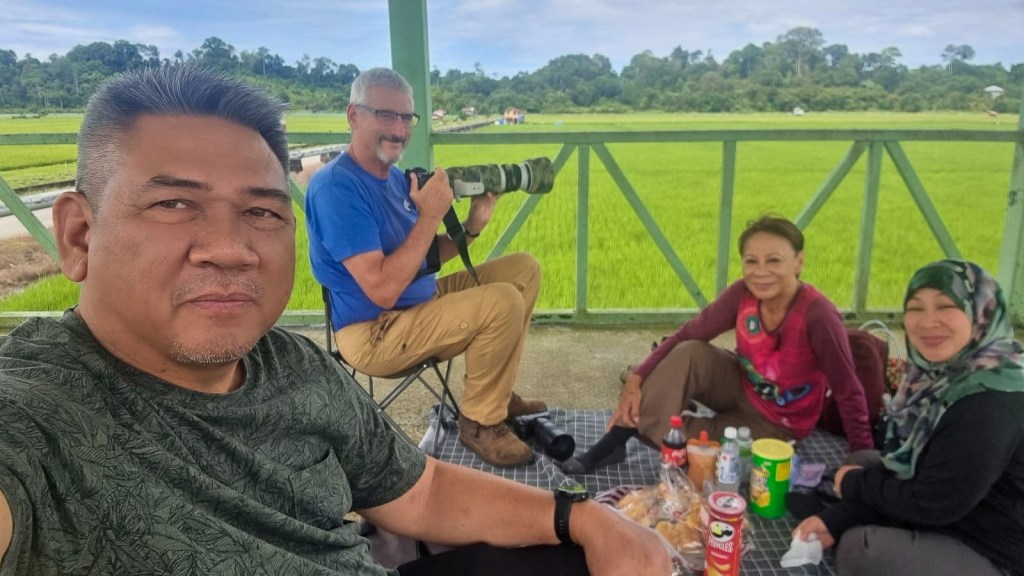
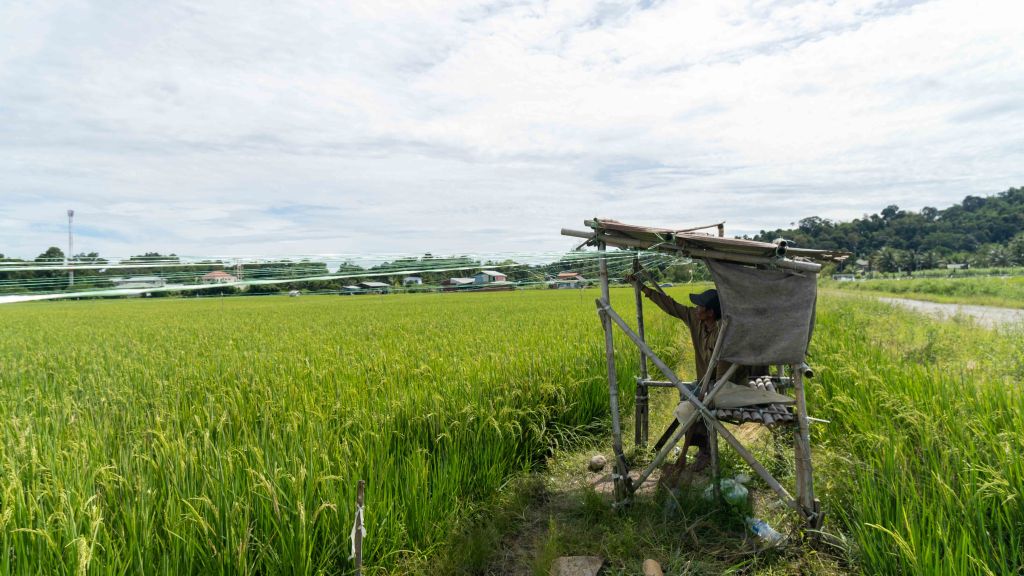
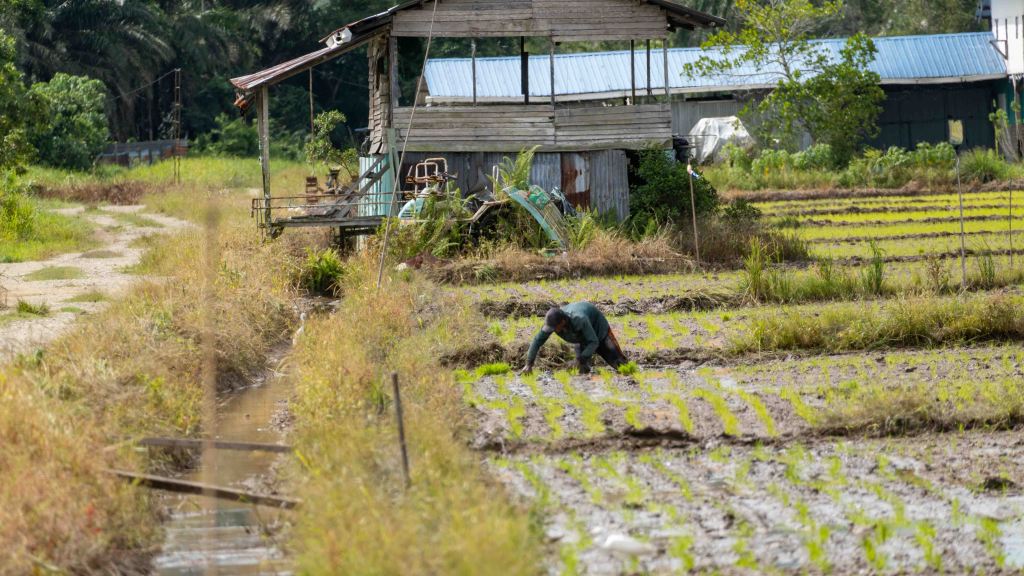
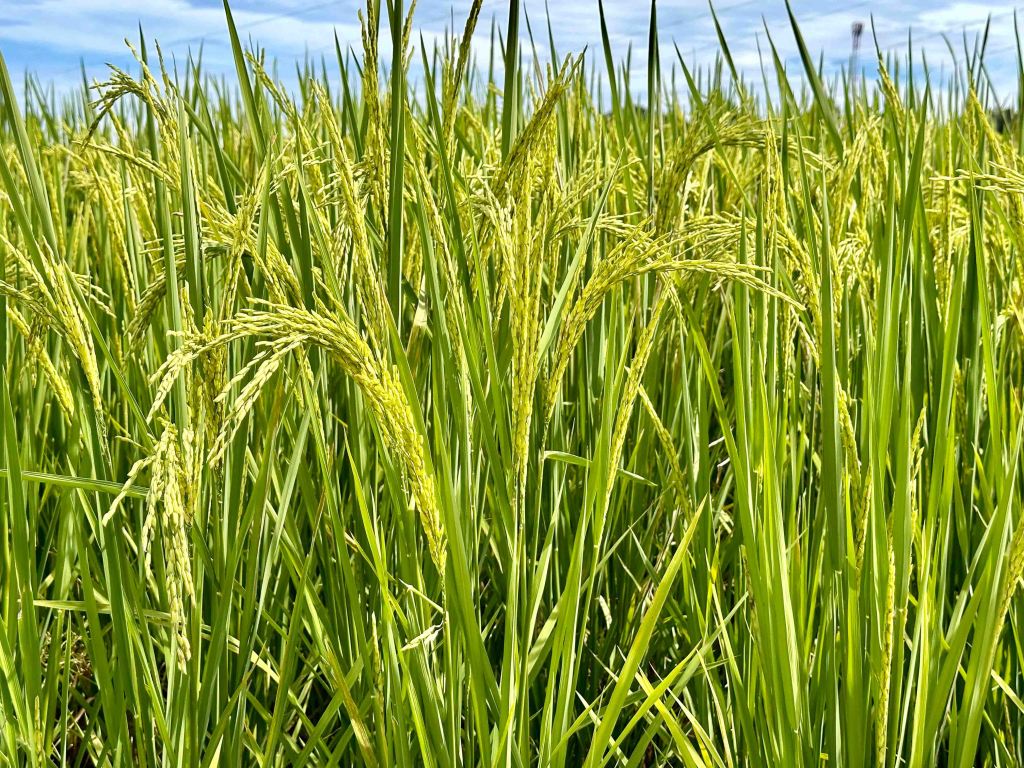
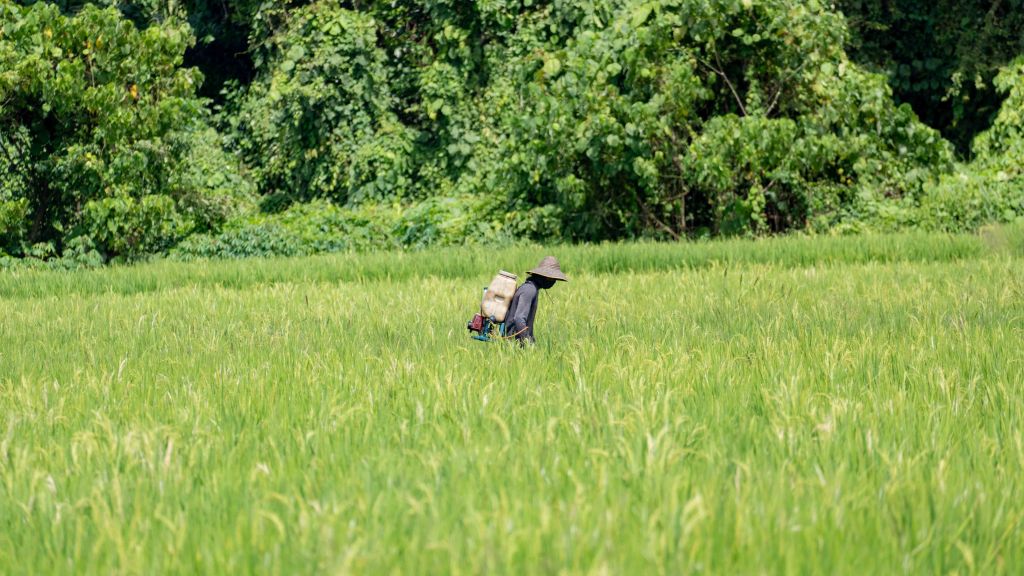
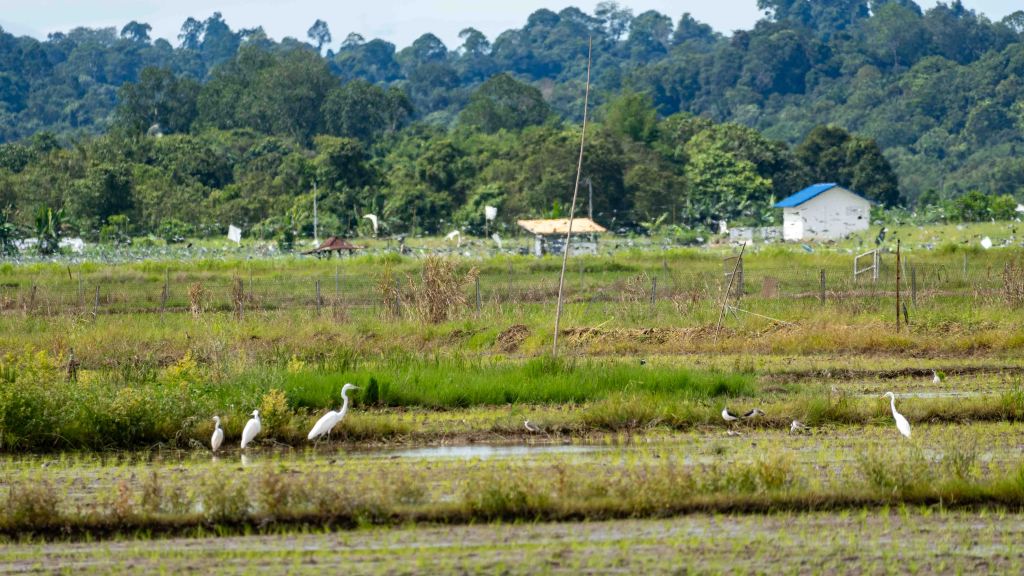
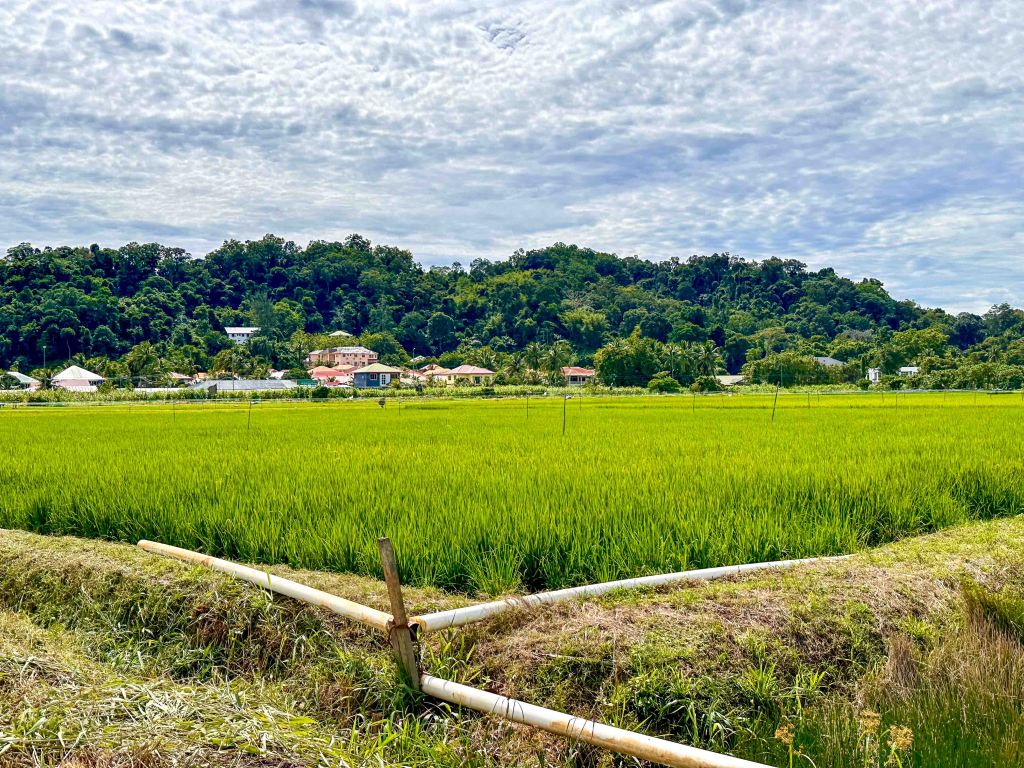
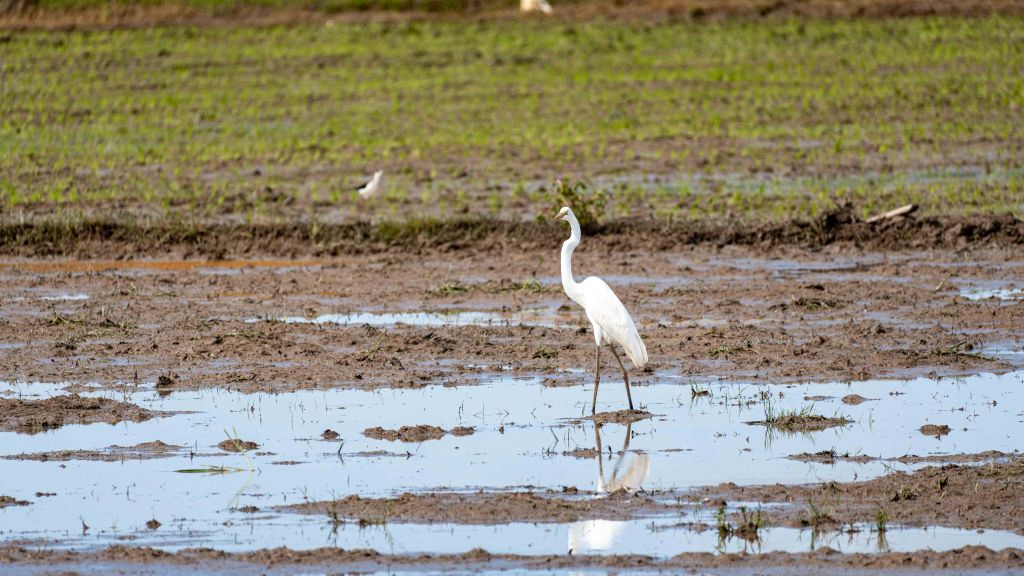
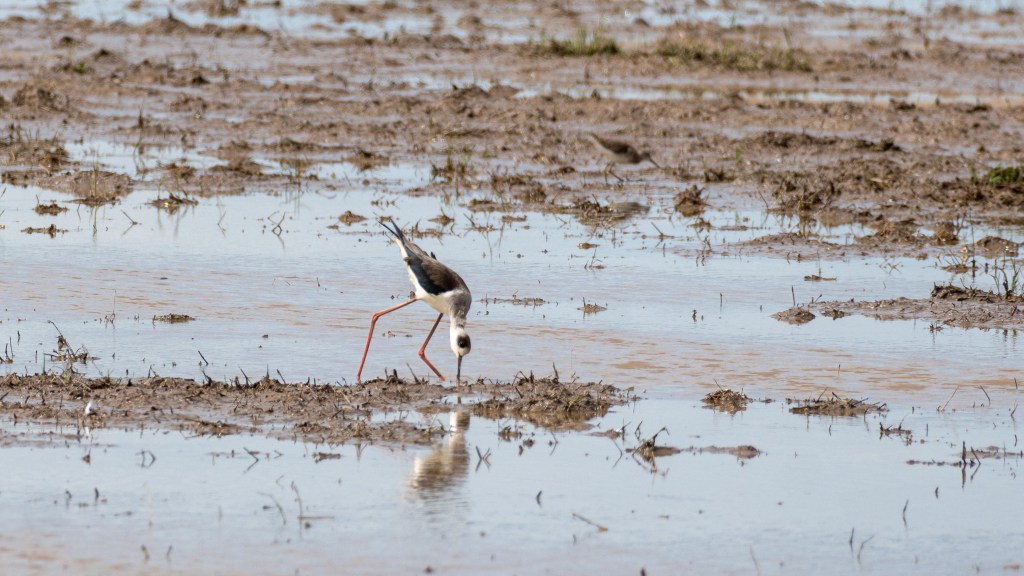
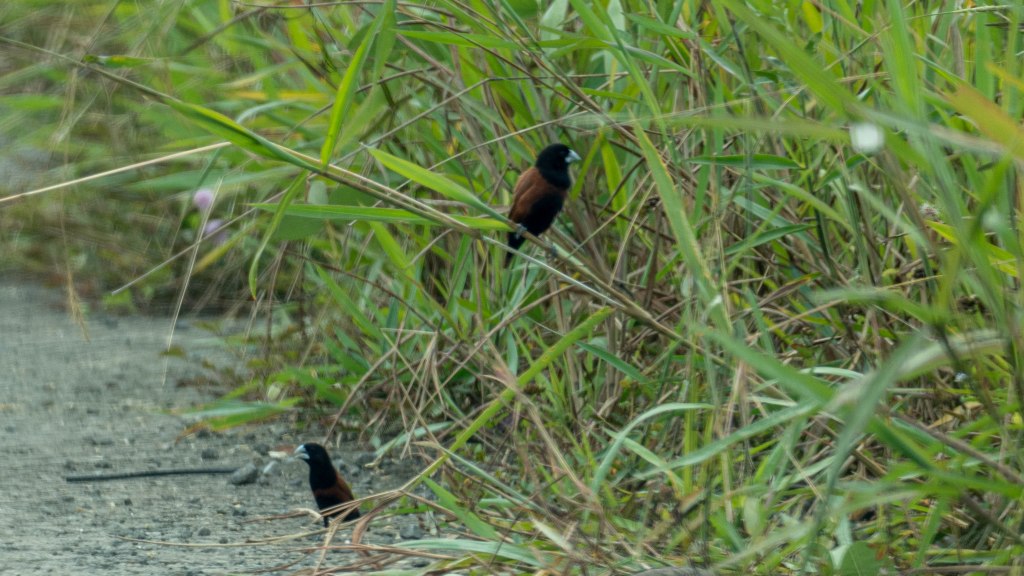
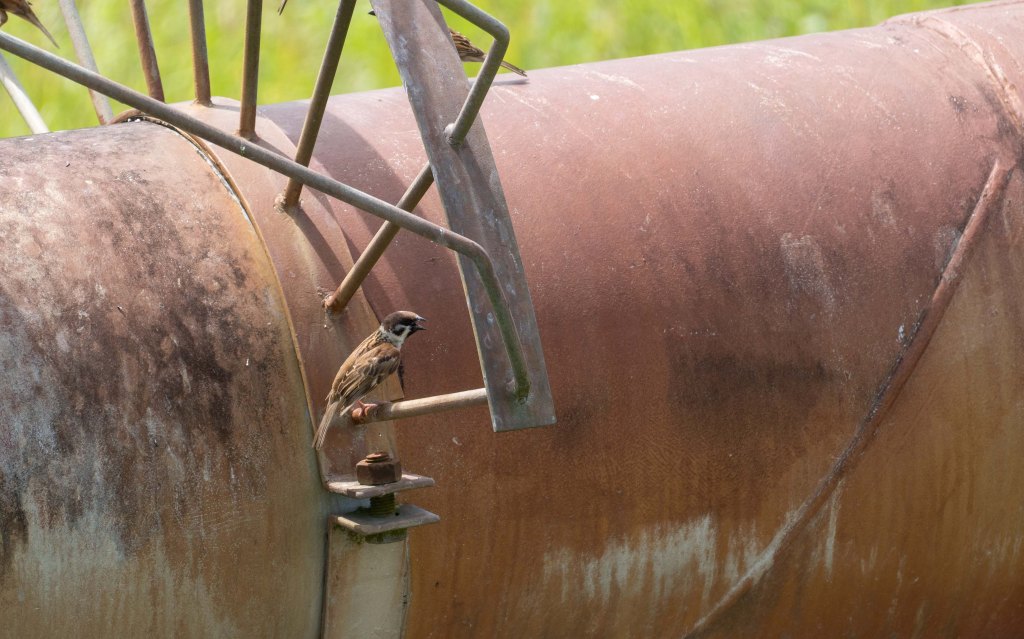
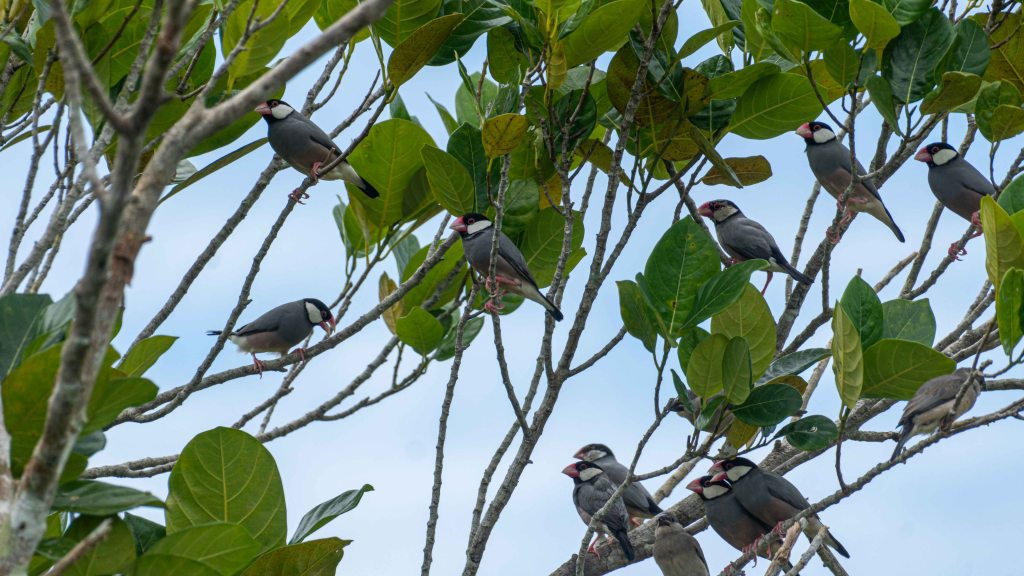
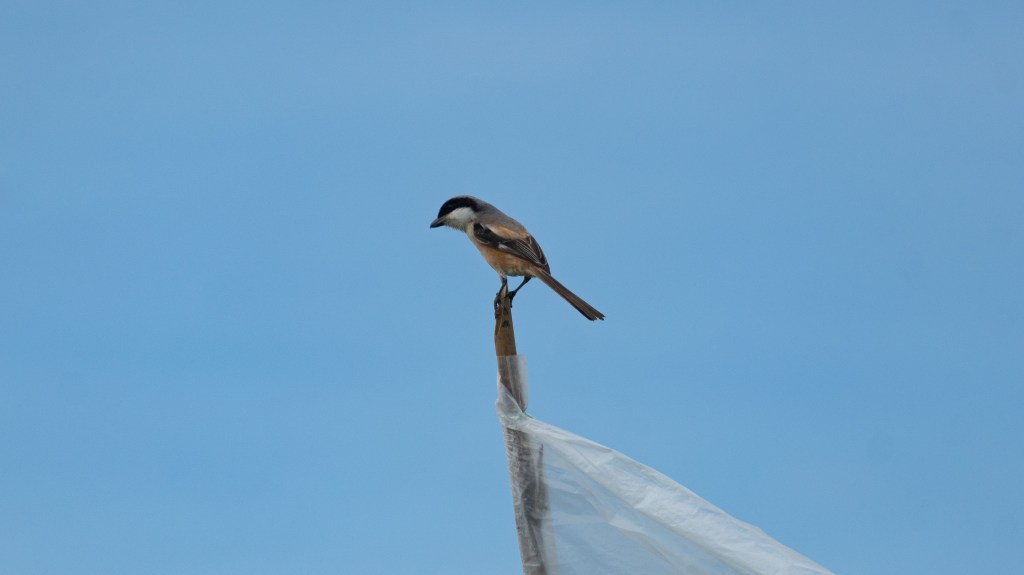
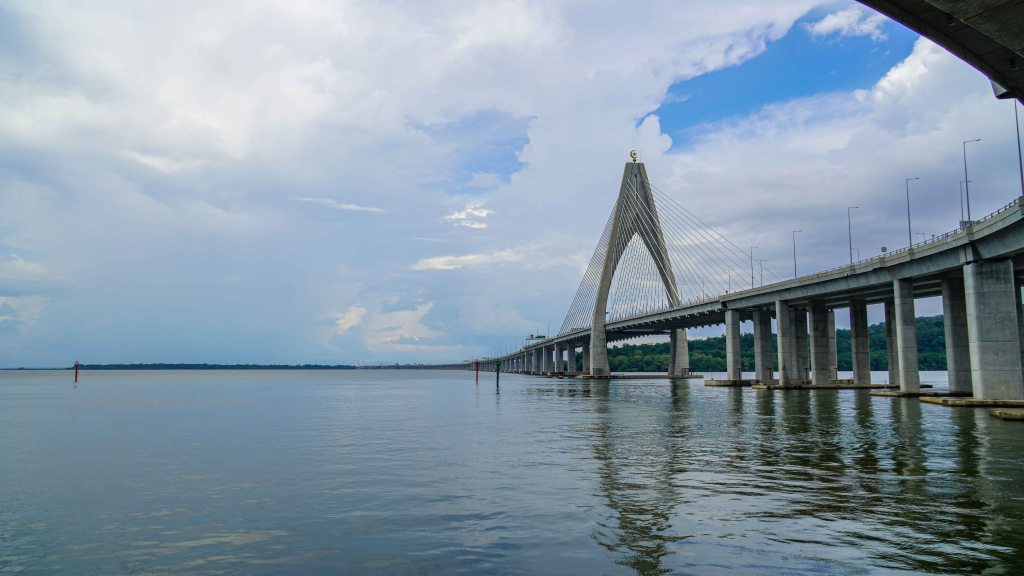
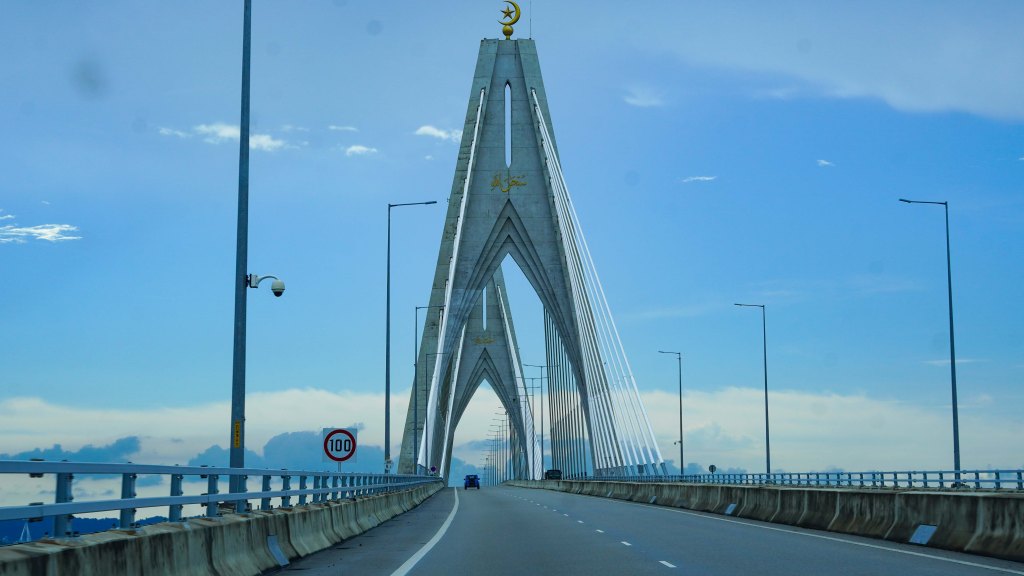
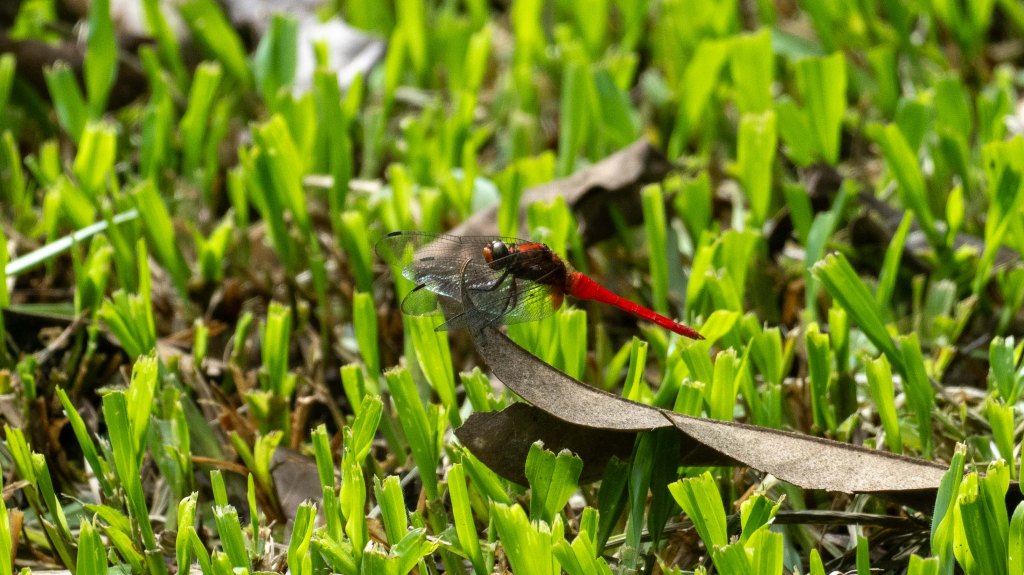
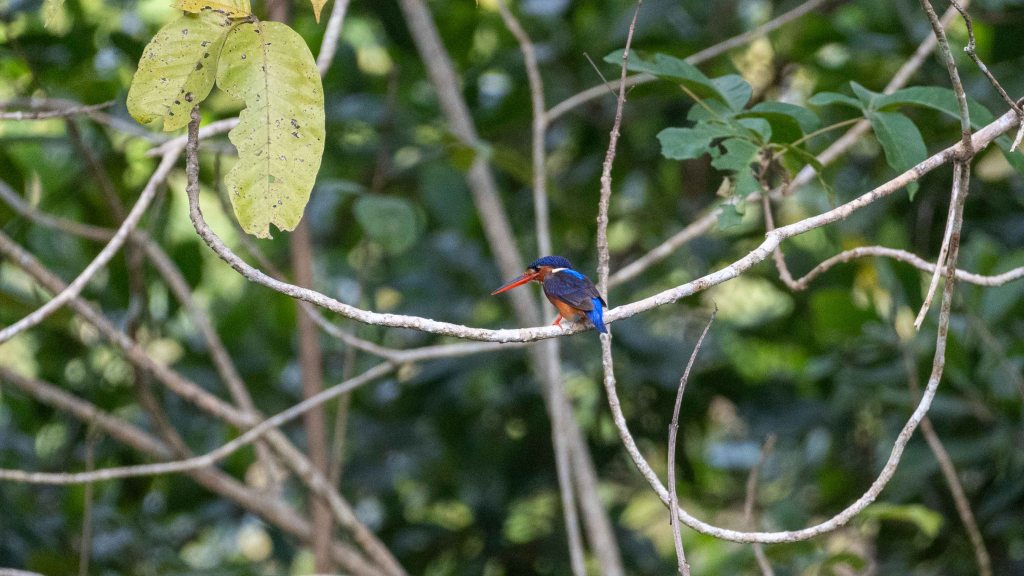
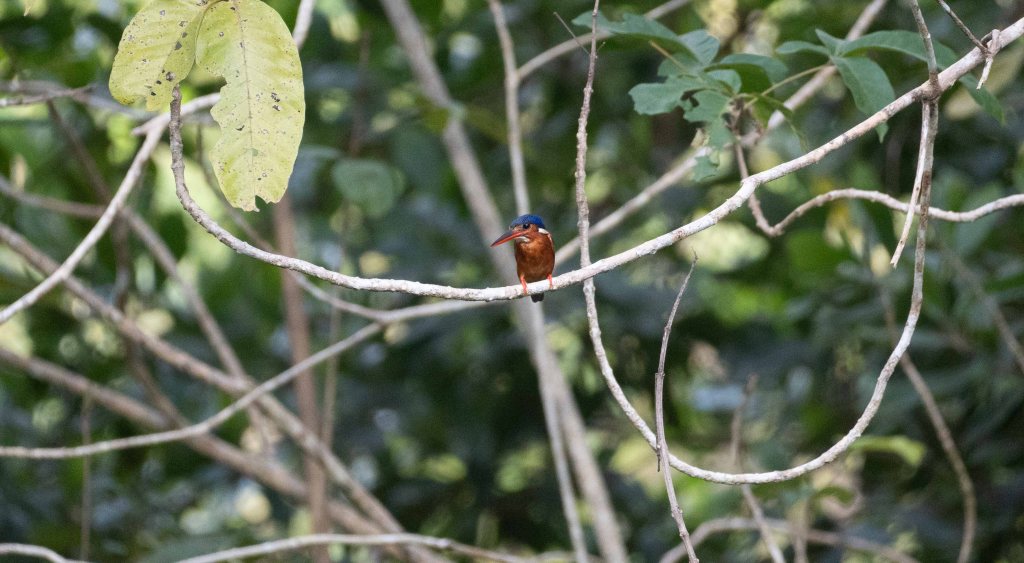
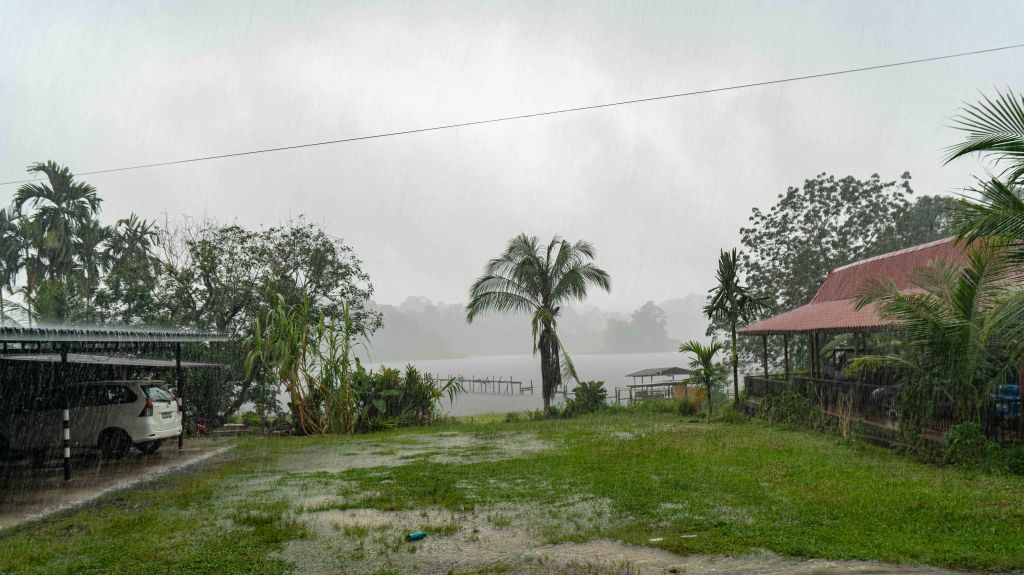
It was rainy season. This meant severe rain and thunder storms during the night and sometimes during the day. This limited the local trips we could make. On one trip Husseini and Siti-Mariam took us to visit the rice field in the Tutong district in the hope to see and photograph different migrating birds. The fields are in different stages of development. Some are just planted while others are already ripe. There are small shelters in the field where migrant laborers operate a string system connected to bells and silver paper to scare away the birds. We had lunch on a viewing platform and managed to take some interesting pictures of the birdlife around the fields. After lunch we drove over the long new bridge connecting Bandar to Temburong. Before having this bridge, this area can only be visited using speed boats via the Brunei bay. But following the construction of the direct connection to the capital more visitors make it to this mountainous jungle area. More and more trails through the jungle are being developed. The tourist accommodation along the Sungai Temburong River invite ecotourists to take a boat ride up the river and see the diversity of the jungle around the Kuala Belalong Field Studie Centre.
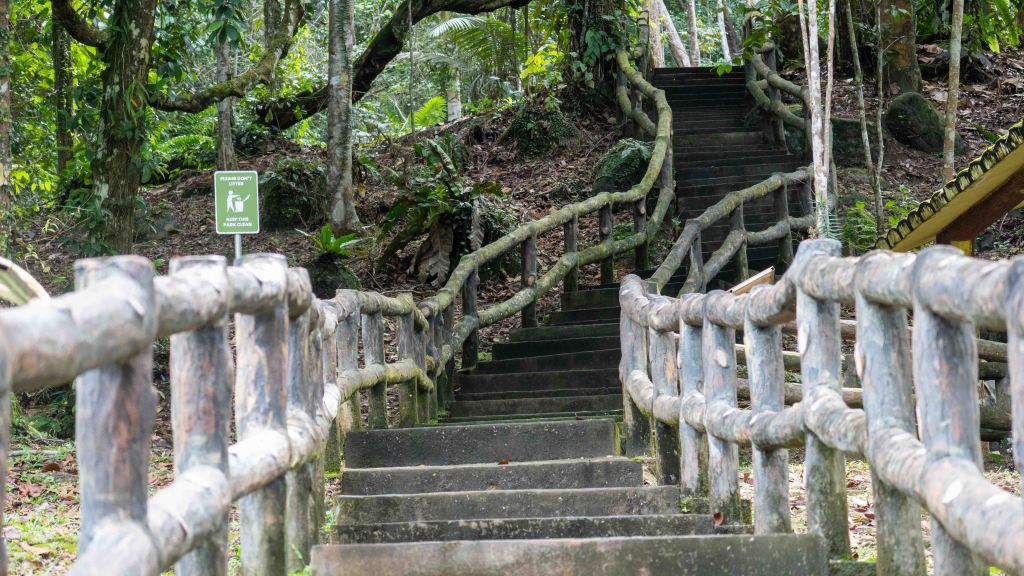
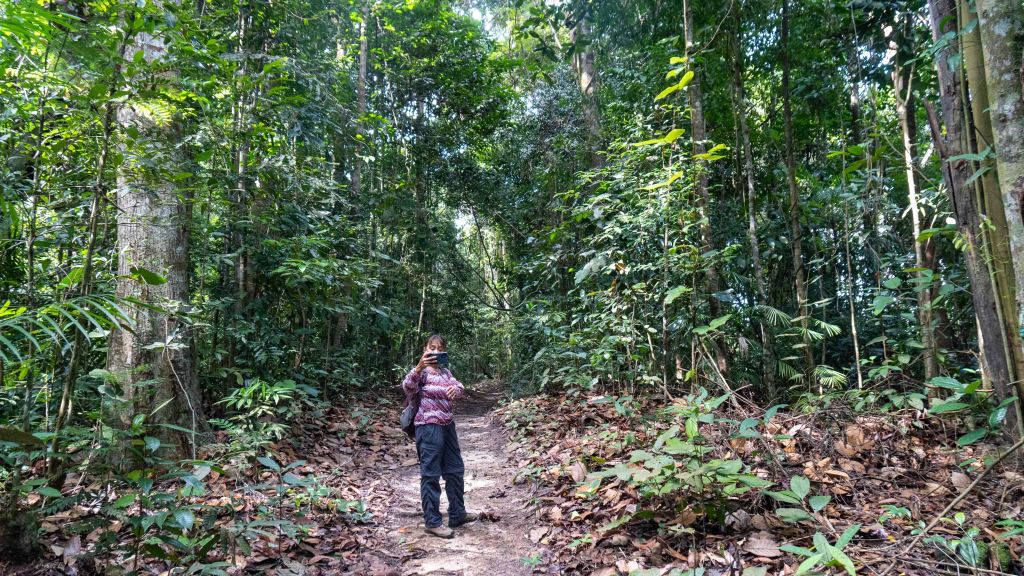
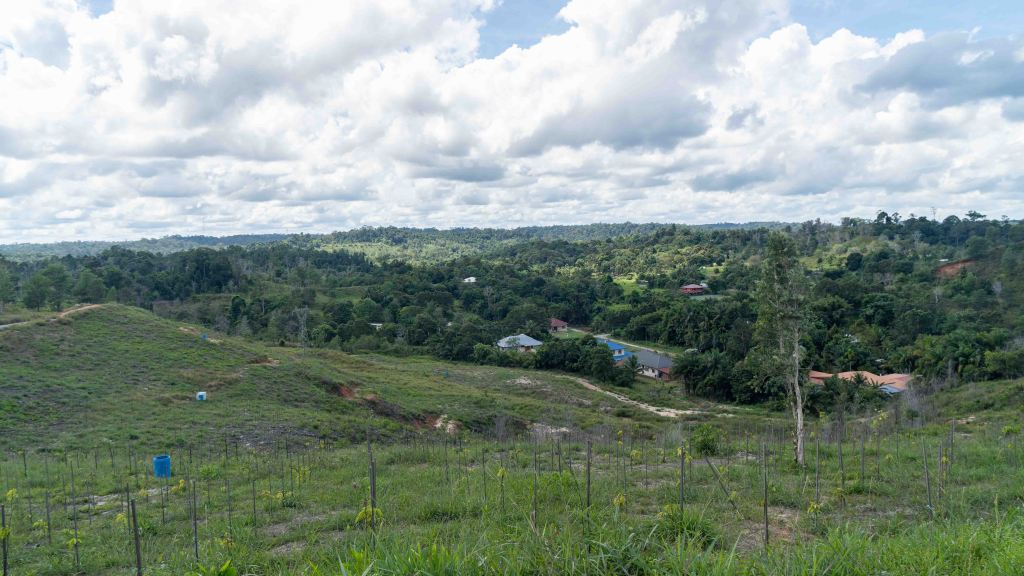
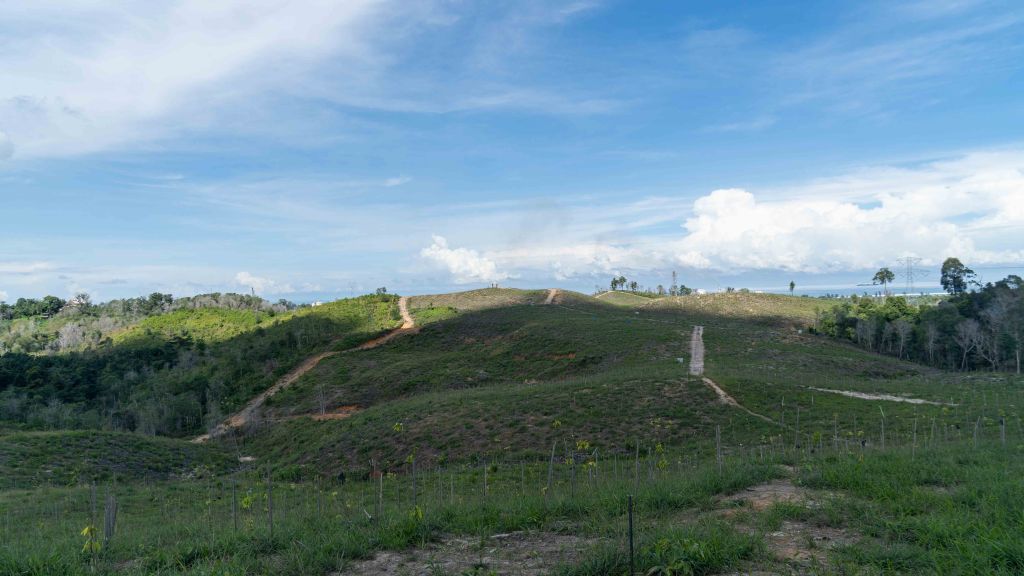
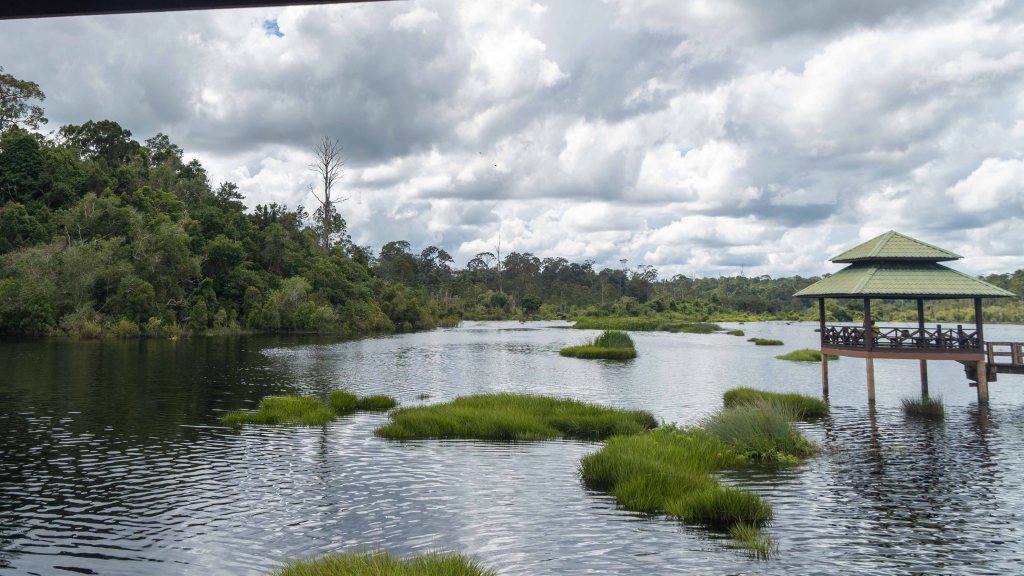
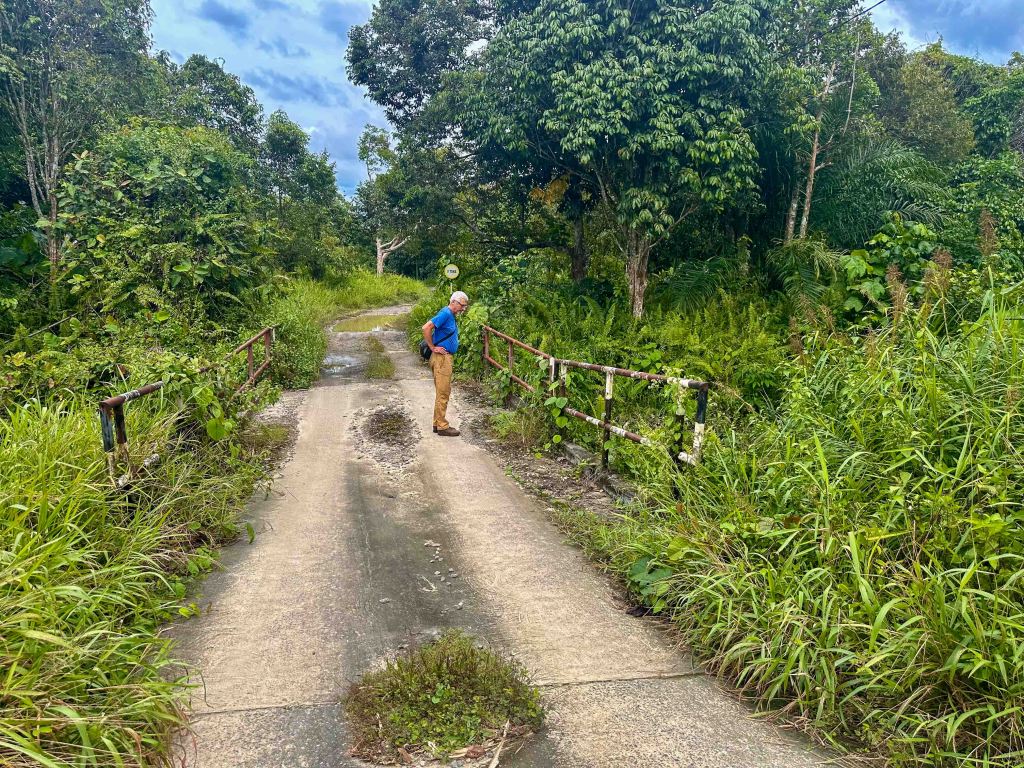
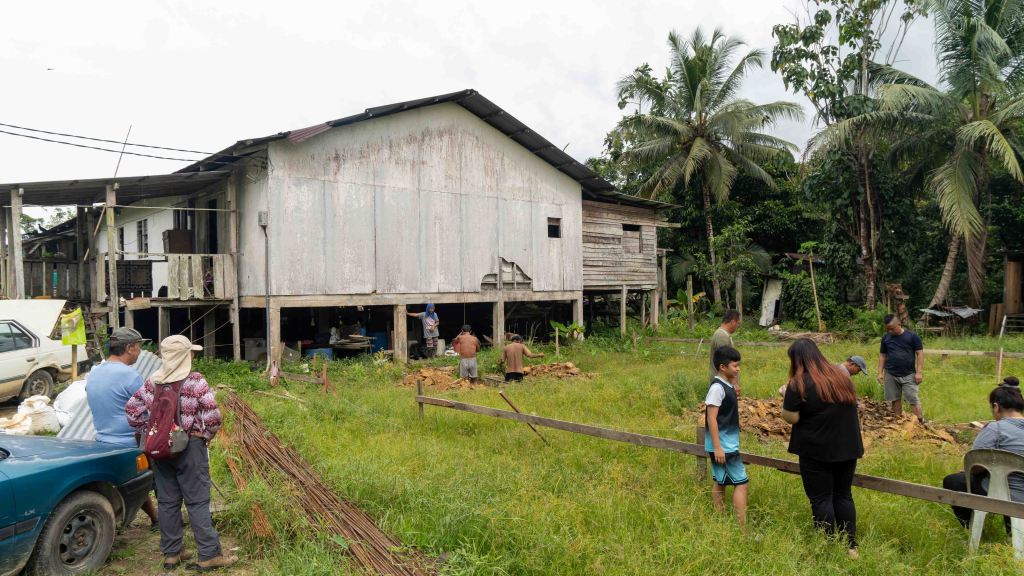
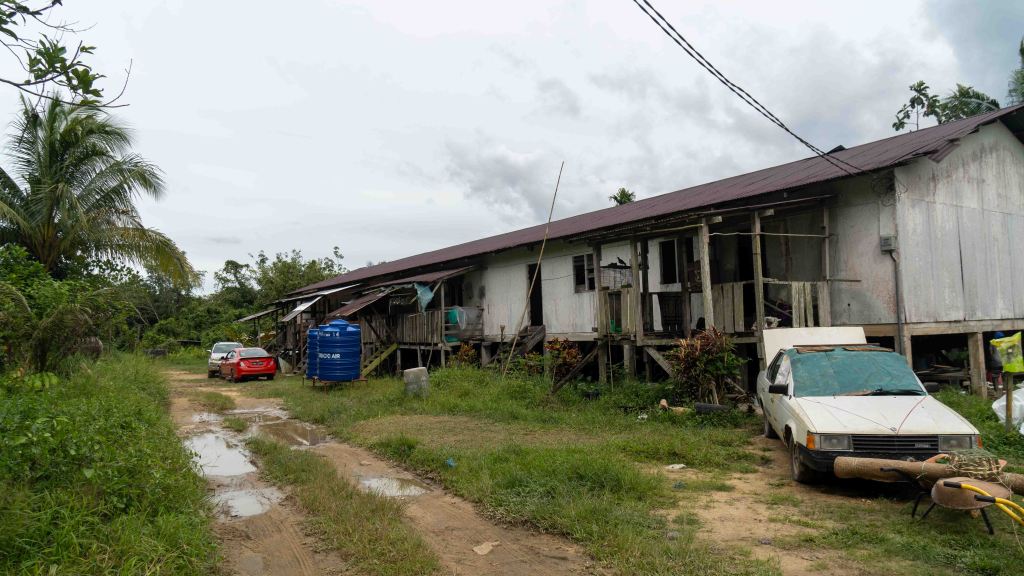
On another trip Jamaliah and Rudy drove a 4×4 pickup truck to the end of Labi road. This is one of Rudy’s favorite roads. It is tarmacked and runs over the top of the hills for 50 km to the border with Sarawak (Malaysia). The road was built in the 1920’s by Shell in their search for oil. They never found any there but instead some years later, in the swamps along the coast at Seria. The road cuts through primary jungle. In the valley at Labi, there is extensive farming of Limes, Papaya, Mango, Cassava, Rice etc. At the end of the road lies Bukit Teraja with at its base a longhouse. The mountain is 417 m high. The old road/paths to the top have been washed away or are overgrown. A new route is under development. In the past (1989-1992) Jamaliah and Rudy made many trips exploring the area with its many waterfalls. On the way back to the coastal road a detour was made to an old rice planting area close to the Belait river. The road is in very poor condition. You could no longer reached the river. Instead, we parked the car and walked over a small bridge to the nearby longhouse. The longhouse community was busy building an extension to one of the 2 longhouses. Years ago, Rudy visited this longhouse area. It was made of wood then. This burnt down some 10 years ago. With help from the government, a new concrete longhouse was built. The last trip over the eroded road from Labi towards lake Tasek Merimbun was made in pouring rain. At one point we (Chris and Rudy) had to turn back and find another road. The road conditions were too bad. Tasek Merimbun lake was once a well-developed recreational area with several small islands in the lake connected with wooden walkways. You could also rent boats here. Unfortunately, this has all disappeared








 Rudy Welling's Travels